

The first time I went to Ubud, I packed for the beach: swimsuits, shorts, flip-flops. I pictured Bali as sun, sand, and poolside chill.
But one afternoon walking Campuhan Ridge in flip-flops, the sky turned dark, rain came down warm and heavy, and the path turned to mud. I ended up barefoot, holding my sandals, feeling foolish. At a small warung, the owner wordlessly handed me a towel and a glass of thick Balinese coffee. The rain stopped twenty minutes later.
That moment taught me about the weather in Ubud. It’s not dramatic or harsh, but it demands thoughtful packing beyond “it’s hot, it’s Bali.”
This guide will cover what the weather in Ubud is really like year-round, how to pack by season and time of day, the small kit I carry daily, and mistakes I’ve made you should know to avoid.
What the Weather in Ubud Is Really Like

Ubud, in Gianyar Bali Indonesia, stays warm year-round with temperatures between 22°C and 31°C. Average highs range from about 28°C in July and August to 31°C in October and November. Lows hover around 22°C in July and August and 24°C in December and January.
The key difference across the year is rain, cloud cover, and humidity, not temperature. Ubud sits inland at about 210 meters above sea level, so nights are cooler than the southern coast, and mornings feel softer than Seminyak’s.
November to April: The Wet Season
This wetter stretch runs roughly from 10 November to 6 April. January is the peak, with about 18.5 days of rain and 264mm rainfall. It’s the cloudiest month, with skies overcast or mostly cloudy nearly 90% of the time. The rice fields are lush green, and the air smells of wet earth and incense.
May to October: The Dry Season
From April to November, the weather clears. August is the driest and sunniest, with only about 2.2 wet days and around 15mm rain. Skies are clear or partly cloudy about half the time. It’s perfect for rice-field walks, cycling, and temple visits—but remember, “dry” doesn’t mean rain-free.
Packing for Weather in Ubud: Season First, Then the Hours
I pack in two steps: first for the season, then for the time of day.
Step 1: Pack for the Season
| Season | Feel | Priorities |
|---|---|---|
| November–April | Wet, cloudy, humid | Umbrella, light rain jacket, waterproof bag, quick-dry clothes |
| May–October | Drier, brighter, sun-heavy | Sunscreen, hat, breathable clothes, walking shoes |
Step 2: Pack for the Time of Day
- Morning: Best hours for rice terraces, temples, and villages before heat and crowds.
- Midday: Slow down—lunch, café, museum, or massage.
- Late afternoon: Back outside for walks, markets, or evening performances.
In the wet season, rain often hits in the afternoon. Plan outdoor activities early to avoid losing much time.
Pro tip: Schedule must-do activities for the morning. Afternoons should remain flexible. If rain comes, you’re already somewhere dry, coffee in hand.
The Small Weather Kit in My Day Bag
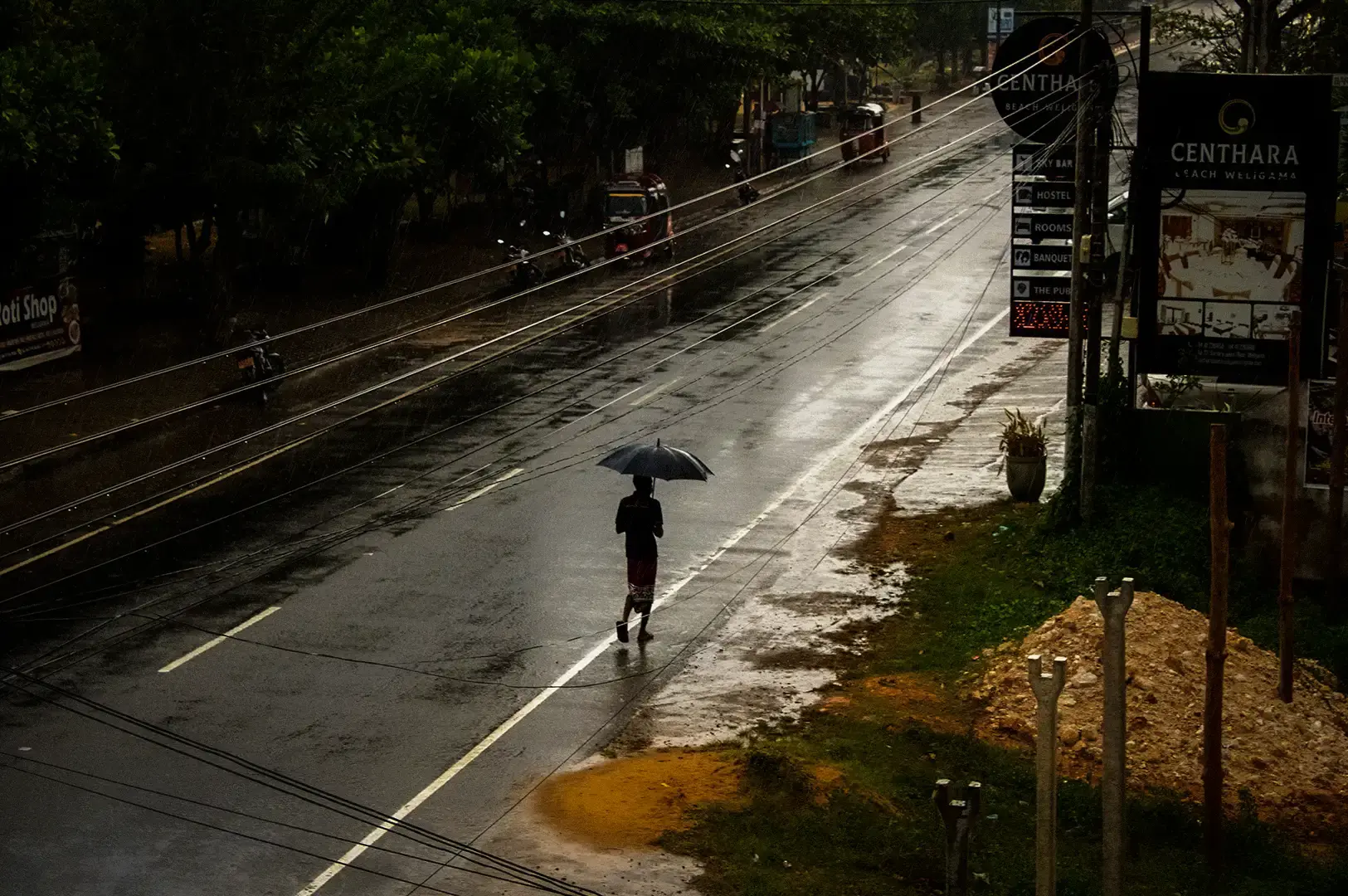
On my first trip, I carried a heavy backpack stuffed with “just in case” things. I used almost none of them.
- Compact umbrella
- Light rain jacket
- Sunscreen
- Reusable water bottle
- Mosquito repellent
- Waterproof phone pouch
It weighs very little. It handles a bright morning, a sudden downpour and an evening of mosquitoes without fuss.
Insider: In the wet season, the waterproof pouch is more crucial than the jacket. Your shirt dries quickly, but your phone might not.
Cloud Cover in Gianyar Bali Indonesia

Ubud sits in the Gianyar regency, and cloud cover shapes the days here more than temperature does.
If you care about sunrise over the rice terraces or temple photos in clean light, August gives you the best odds. January gives you the worst. But I’ve stopped treating clouds as bad news.
On my third visit, in March, I woke to a flat grey sky—a classic cloudy day. I almost stayed in. Instead, I cycled the back roads north of town toward the rice fields. No glare. No sweat running into my eyes. Farmers were already out in the paddies, unbothered.
It was one of the best mornings I’ve had in Indonesia.
A cloudy day isn’t a lost day. Often, it’s just a cooler one. Before you cancel anything, check whether the forecast actually shows rain, or only cloud.
How to Read a Weather Forecast for Ubud

A small handy detail to know, Bali runs on GMT+8, the same as Singapore. The hourly forecast times on your phone line up exactly with your watch. No mental maths.
Most weather apps let you scroll forward or backward through the days—tap the chevron right to move ahead, chevron left to step back. It sounds obvious, but I’ve watched people stare at today’s numbers and miss the storm sitting two days out.
Beyond that, here’s what I look at, and in what order.
What to Check
- Rain probability: When is it most likely, and for how long?
- Feels like: Ubud is humid every month. A 30°C afternoon can feel far heavier than the number suggests.
- Wind: Useful for cycling and transfers. In the dry season, you’ll often see winds coming from the SE. A steady breeze makes the heat easier.
- Cloud cover: For sunrise, sunset and photography.
- Air quality: A separate check. More on that below.
How to Use a 10-Day Forecast
- 10 days out: Wet or dry week?
- 3–5 days out: Adjust packing.
- Day before: Hourly view.
- Morning of: Recheck before heading out.
One more thing. If you use a map-based weather tool—the kind built on a Mapbox logo layer—you can drag across Bali and compare conditions between Ubud and the coast. On a Tuesday (Tue) morning when the hills look unsettled, the southern beaches can be completely clear. That comparison has saved more than one day for me. I’ve checked it as early as 6 13 am before a dawn walk, and again at 11 25 before deciding whether to push through to Tegallalang or wait it out over lunch.
A Word on Air Quality
Air quality isn’t part of a normal weather forecast. A clear, pleasant day can still carry haze, especially during regional burning episodes.
If you’re planning a long walk or a sunrise trek, check an air-quality service separately. If you have asthma, pack a few masks and your usual medication.
Real Examples From the Road
January in Ubud
Average high: ~29°C, low: ~24°C, ~18.5 wet days. Pack breathable clothes, light rain jacket, umbrella, waterproof bag, and grippy shoes. Walk early, keep afternoons open for long lunches or storms.
August in Ubud
Average high: ~28°C, low: ~22°C, ~2.2 wet days. Pack breathable clothes, sunscreen, hat, comfortable shoes, and a compact umbrella just in case. The sun is stronger than it seems.
A Singapore Traveller’s Evening
Singapore evenings barely cool down. So it’s easy to assume Ubud’s won’t either.
In July and August, though, Ubud’s lows drop to around 22°C. That’s not cold. But after a day of humidity, sitting at an open-air restaurant or watching a temple dance, the air can feel suddenly thin on your arms.
A light cardigan solves it. I keep one rolled at the bottom of my bag.
Common Packing Mistakes
- Packing only beach clothes. Ubud isn’t a beach town. You’ll walk rice fields, enter temples and wander villages. Bring at least one comfortable, modest outfit.
- Bringing a heavy raincoat. On my second trip, I packed a thick waterproof jacket. I wore it once. A light rain shell or compact umbrella is enough.
- Wearing flip-flops everywhere. Fine for the pool and the café. Not for Campuhan Ridge, rice-field paths or wet village lanes. I learned that one barefoot.
- Forgetting temple clothing. Balinese temples ask for covered legs and often a sarong. Some lend or rent them. Rules vary by site, so follow what’s asked at the gate.
Dressing for Ubud’s Temples and Humidity
Ubud’s temples are living places. People leave offerings there every morning, small palm-leaf baskets of flowers and rice set on stone steps.
Rather than packing a separate temple outfit, I choose clothes that work for both:
- Lightweight long pants or a loose long skirt
- A breathable shirt with sleeves
- A sarong or shawl
Linen, cotton and quick-dry fabrics work best. Loose beats fitted. You’ll stay cooler, and you won’t need to change before walking through a temple gate.
Why Ubud Feels Familiar, Yet Different
Singaporeans know humidity. We know sudden rain and a hard midday sun.
So Ubud won’t feel foreign. What’s different is the rhythm of the year. At home, one month feels much like the next. In Ubud, the wet and dry seasons are clear and real.
That’s the adjustment. You’re not packing for heat. You’re packing for the season you’ll land in.
The same idea, matching your choices to your pace, applies to where you sleep too. I wrote about it in this guide to choosing the best Bangkok hotels that suit your travel pace.
Before You Zip Up That Bag

What I’ve learned about packing for Ubud is that the goal isn’t to outguess the sky.
You’re not trying to prepare for every possible version of the day. You’re trying to give yourself enough room to move with it.
In Ubud, that usually means a light layer for early mornings, breathable clothes for humid afternoons, shoes that can handle wet paths, and rain protection you won’t resent carrying. Nothing dramatic. Just a few thoughtful choices that make it easier to keep going when the weather shifts.
That, to me, is the whole point. The weather in Ubud doesn’t have to interrupt the trip. If you pack well, it simply becomes part of the rhythm of it.
Bring less than you think. Choose better than you usually do. Then let the day change shape without feeling like your plans have fallen apart.