Some towns ask to be seen. Rovinj asks you to stay.
The first time I looked at a map of Rovinj, I made the usual mistake. The Old Town looked small, so I gave it one day. I pictured a morning walk, a church, lunch by the water, and on to the next stop.
That plan didn’t survive the first afternoon.
Rovinj began as an island. The channel that separated it from the mainland was filled in during 1763, yet the old town centre still feels like it floats. The narrow streets climb toward a church on the hill. The Adriatic Sea sits at the end of almost every lane. A forest park, a protected coastline and a scatter of small islands all lie within easy reach.
You can see Rovinj in a day. But you can’t really feel it in one.
This guide is for Singapore travelers who want something slower than a checklist. It covers seven loose days, what each one is good for, and the small lessons I’ve picked up about pacing a week here.
Getting to Rovinj Croatia
There’s no MRT in Rovinj, and no metro. There are also no direct flights from Singapore, so expect at least one connection.
The closest major airports are generally:
- Pula Airport
- Trieste Airport
- Venice Marco Polo Airport
From any of these, you’ll continue by road. Venice and Trieste make sense if you’re pairing the trip with Italy and the history between these two countries is woven into Rovinj’s architecture and culture. Pula keeps you within Croatia.
Once you arrive, you won’t need much. Rovinj’s Old Town is built for walking, and the local tourism board actively encourages walking and cycling. Buses and taxis cover longer trips. Accommodation in town rovinj ranges from boutique hotels tucked into the old town centre to quieter options just outside the main streets.
Pro tip: You don’t need a car for a week centered on Rovinj. A car only becomes useful if you plan a day trip into rural Istria, its inland villages or archaeological sites. If you do want one, rent it for a day or two rather than all seven.
When to Visit Rovinj
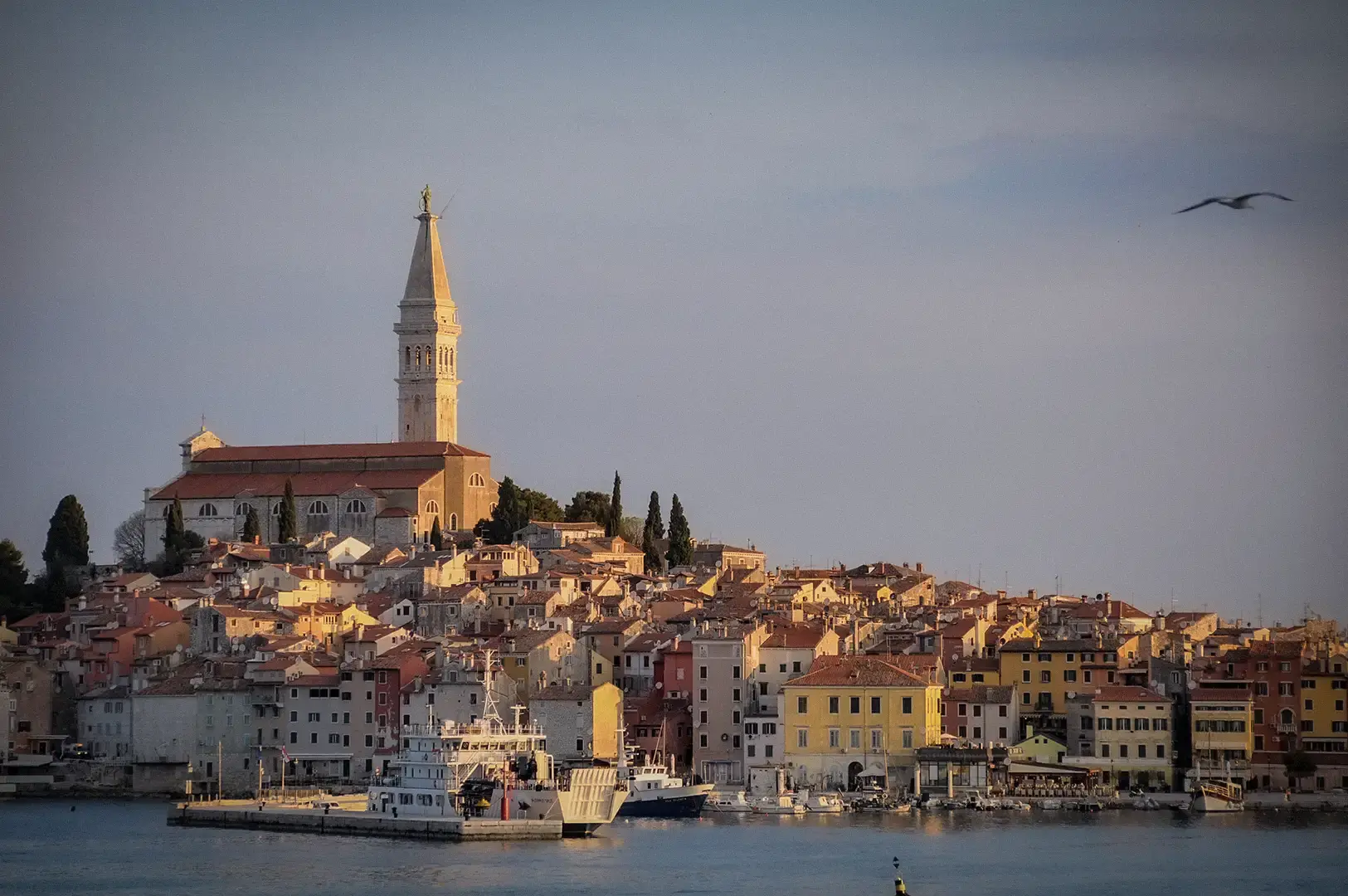
Rovinj isn’t only a summer town. The tourism board promotes it across all four seasons—one of the best places in Europe to visit outside the usual peak.
Summer brings warm water, strong sun and the most visitors. It’s good for swimming, island trips and long dinners outside. It’s also when the waterfront feels busiest and prices climb.
For a slow week, I’d suggest September.
The sea is usually still warm enough to swim. Walking feels easier. The peak-season crowds thin out. Weather does vary from year to year, so pack for a few surprises. It’s a wonderful time to explore the coast without the full summer bustle.
September also has a quiet heart. St. Euphemia’s feast day falls on September 16, and it has long been an important day for the town, historically drawing people from across Istria. In 2025, the celebration included concerts, workshops, exhibitions and traditional food. If your dates allow, build your week around it. Then let the town show you what that day means to the locals who still mark it.
Seven Slow Days: A Loose Framework
Think of this as a rhythm, not a schedule. Swap days around depending on the weather.
Day 1: Arrive Slowly in Rovinj Old Town
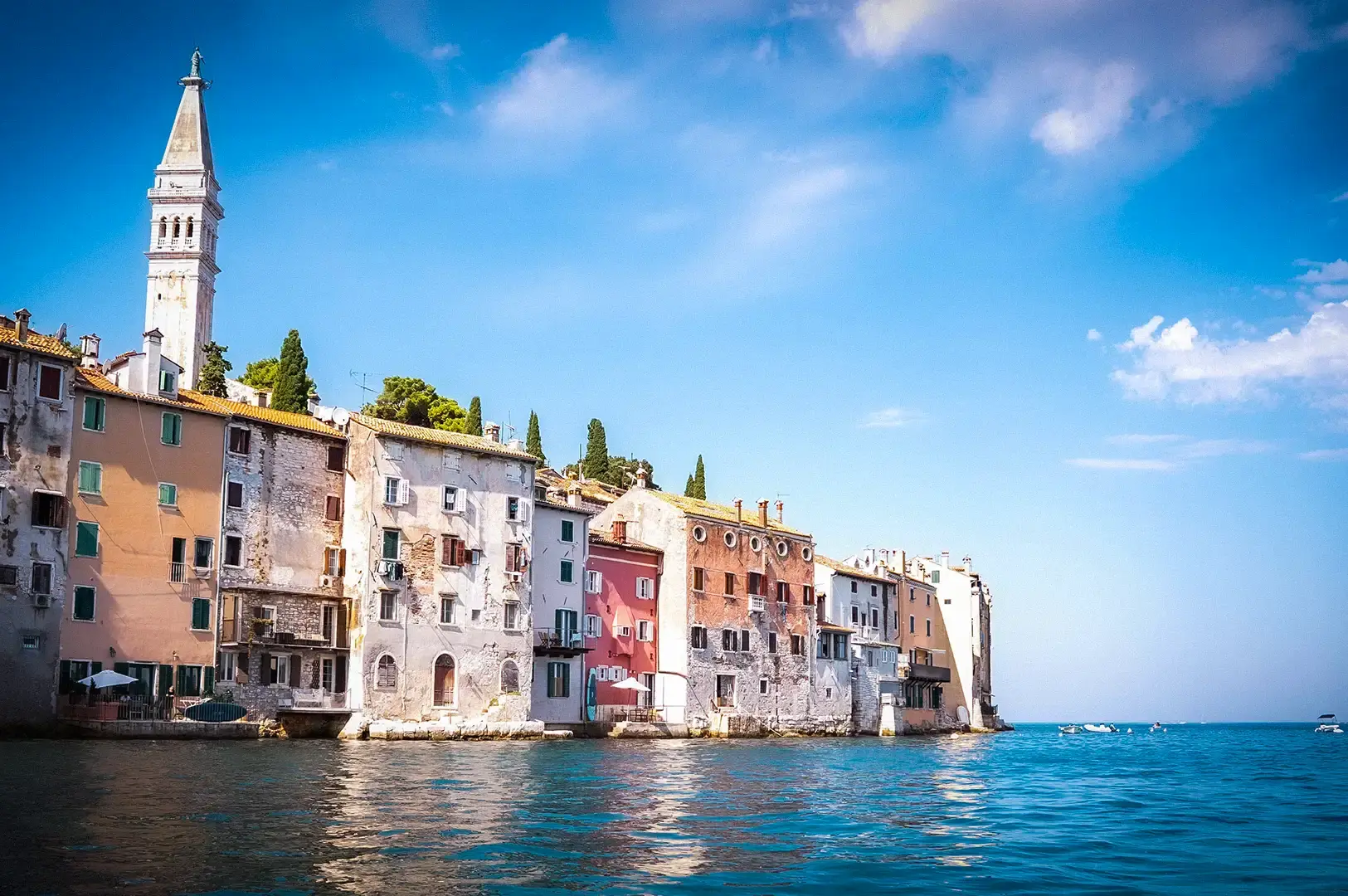
Arrive. Drop your bag. Walk.
The tourism board suggests a 60 to 90 minute route through the old town centre:
- Balbi Arch
- Grisia Street
- Piazza Matteotti
- The harbor promenade
I’d stretch that across an entire afternoon. There’s no ticket to enter the Old Town. It’s a lived-in district, not a gated attraction. Let the cobbled streets pull you uphill. Stop when a doorway or a patch of shade asks you to. Peek into the cafes and bars tucked into the quieter lanes—the ones without menus displayed in six languages are usually the ones worth sitting in.
End at the harbor for sunset. Sit somewhere with a drink. That’s enough for the first day.
Day 2: The Bell Tower of St. Euphemia
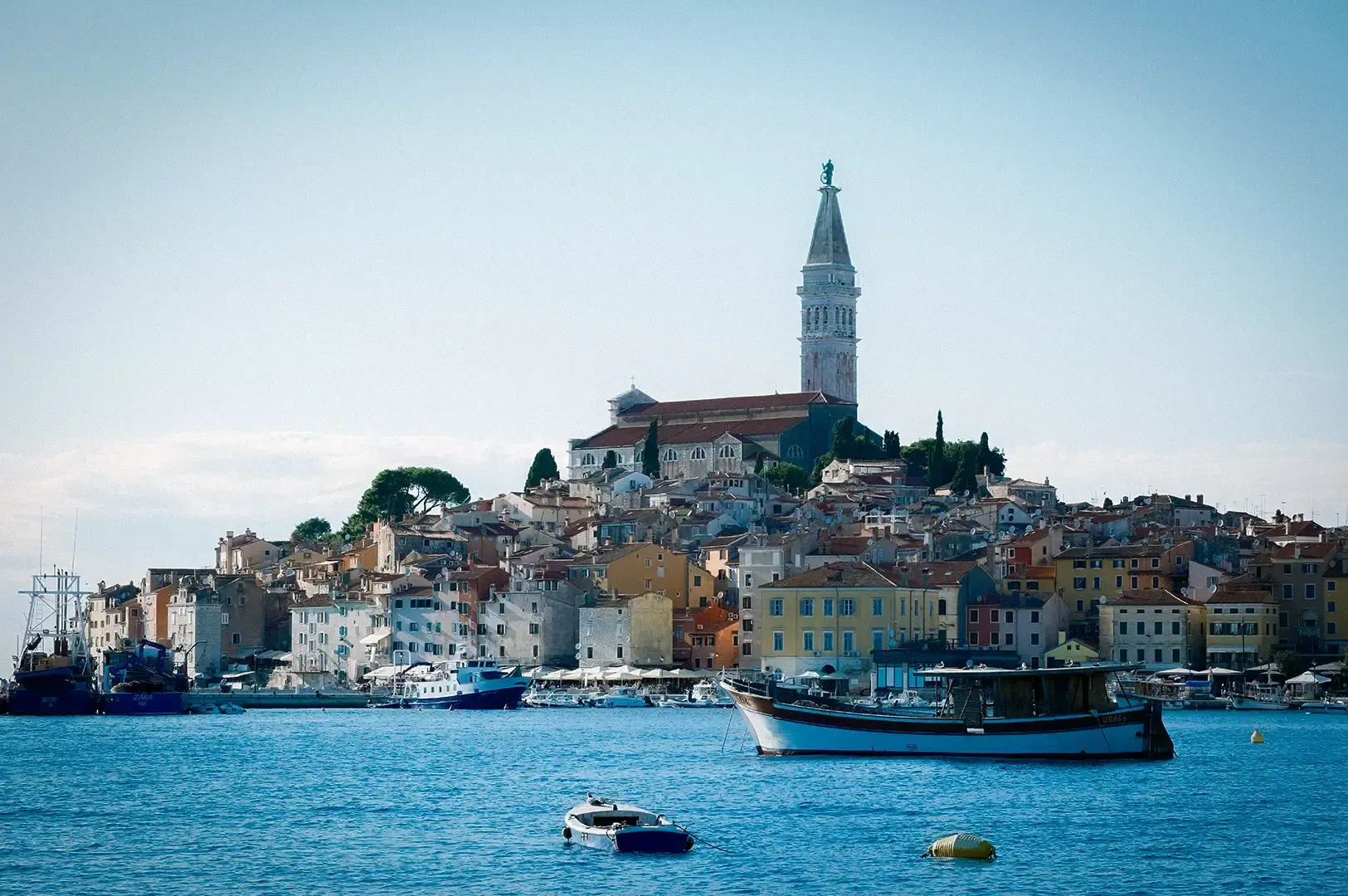
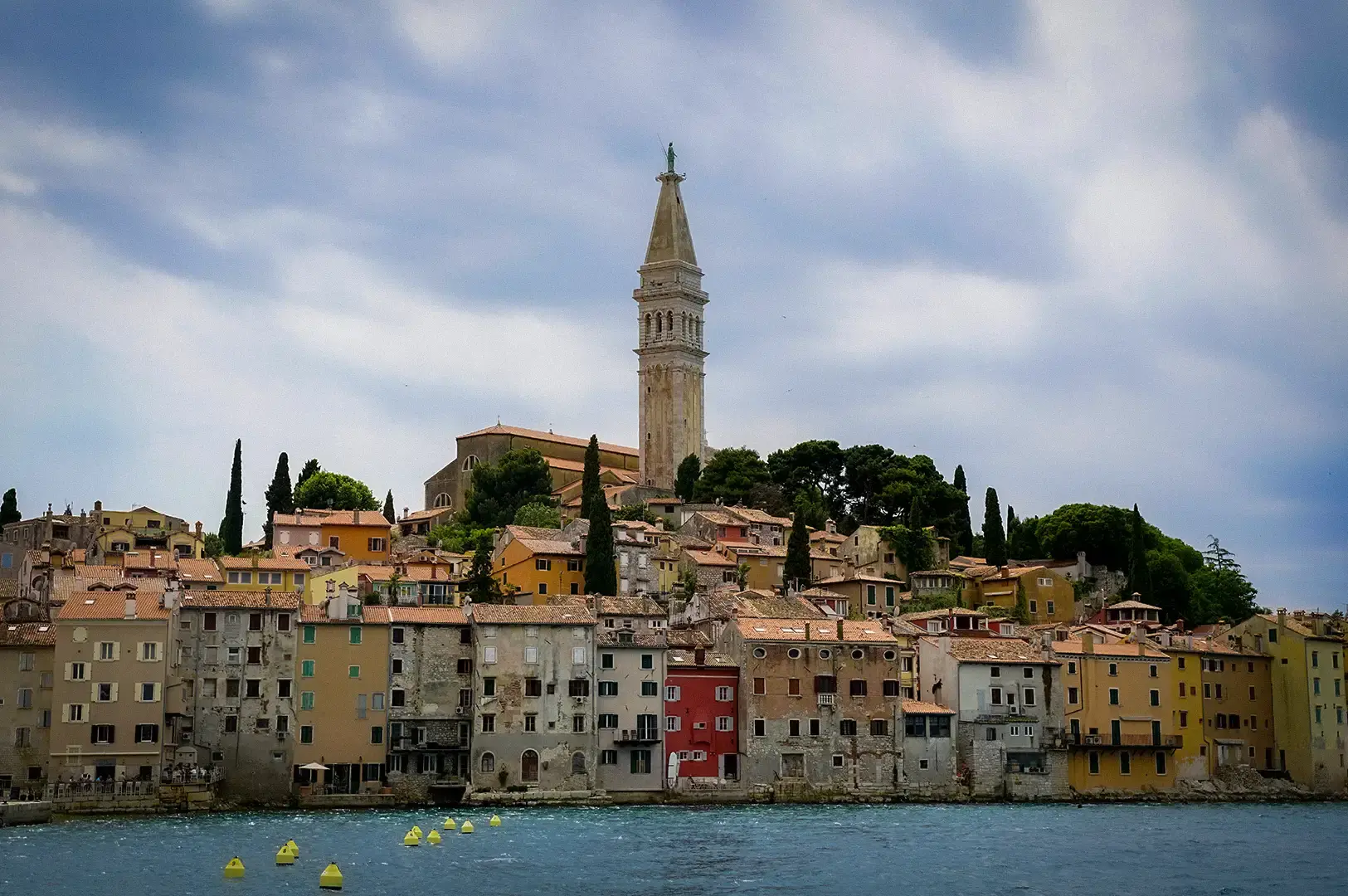
The Church of St. Euphemia, on Trg Sv. Eufemije, is the shape you’ll recognize from every photo of Rovinj. Its church tower rises roughly 58 to 62 meters, depending on which measurement you read.
The climb up the bell tower is about 192 steps. On a clear day, the view stretches over the islands and Lim Bay, and sometimes toward the Italian Apennines — a reminder of just how close this corner of Europe sits to the rest of the world.
Give it 45 to 90 minutes. If the tower is open, I’d aim for about 30 to 45 minutes before sunset, when the light softens over the sea.
Afterward, wander the lanes below and settle into a long lunch.
Insider knowledge: The stairs are steep and enclosed. If heights or tight stairways make you uneasy, there’s no shame in skipping the climb. The view from the church grounds and the harbor is lovely too.
Day 3: A Slow Day at Golden Cape
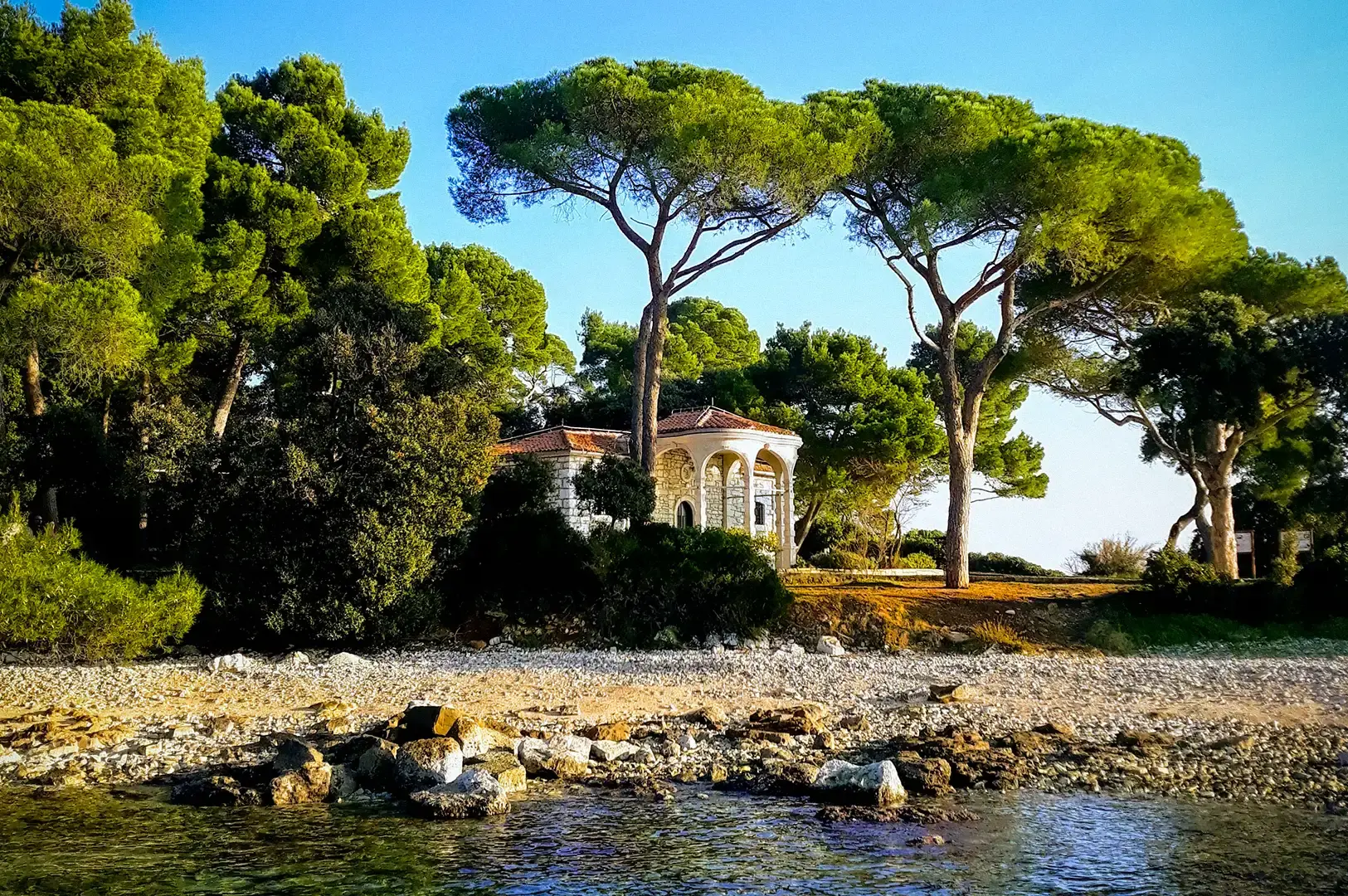
Golden Cape, known locally as Zlatni rt or Punta Corrente, is a forest park of about 120 hectares. Aleppo pines and cedars shade quiet coves and coastal paths.
There’s a 6km cycling loop, and plenty of trails for walking. Bring a towel. Swim somewhere around Lone Bay. Lie under the pines and listen to the water.
Go in the morning or late afternoon, when the heat is gentler. Plan for half a day at least, or a full one if you’re bringing a book.
A word on cliff jumping: you’ll hear about it around Punta Corrente. The tourism board advises checking water depth before you jump. Please do. It isn’t a casual add-on to a beach day.
Day 4: A Boat Ride Around the Rovinj Archipelago
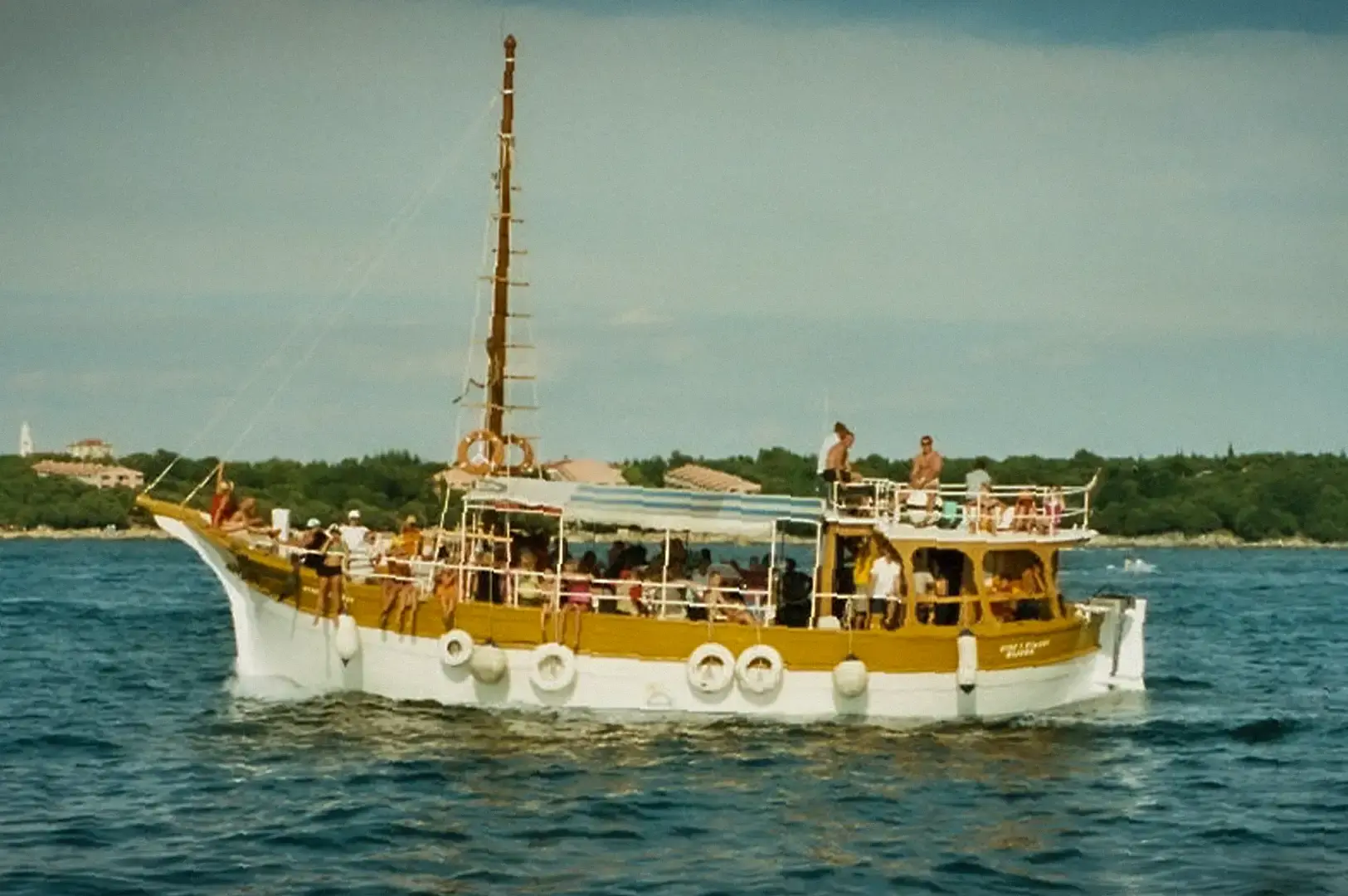
The Rovinj archipelago holds 14 islands and six reefs. You don’t need to see all of them. One good boat ride is enough.
Excursions leave from the waterfront agencies and information points. Options include circular island cruises, Lim Bay trips, fish picnics, underwater sightseeing and evening outings. A typical trip might stop at Red Island (St. Andrew) or St. Catherine, the island close to the harbor.
Choose a half-day trip. Swim in the Adriatic Sea. Come back in time for sunset.
Before booking, confirm the duration, what’s included, food and drinks, and the cancellation and weather policy. Prices vary widely by boat type, group size and route, so ask directly.
Pro tip: Strong jugo, the southerly wind, can make the sea rough, and operators may reschedule. Keep Day 4 flexible. Swap it with Day 5 or 7 if the wind picks up.
Day 5: The Batana Eco-Museum and the Small Pier
This is the day I’d protect above all others.
The Batana Eco-Museum tells the story of the batana, a flat-bottomed wooden fishing boat tied to Rovinj’s maritime life. The museum is listed in UNESCO’s Register of Good Safeguarding Practices. Inside, you’ll learn about fishing traditions, the local dialect, traditional songs and everyday life—the kind of history that doesn’t make it onto most bucket lists, but should.
Afterward, walk to the Small Pier, the oldest pier in town. Wooden batana boats are still moored there. Boats to St. Catherine and Red Island leave from this area too.
Stand there for a while. The boats you just learned about are bobbing right in front of you. That connection is the whole point.
Day 6: The Lim Channel Day Trip
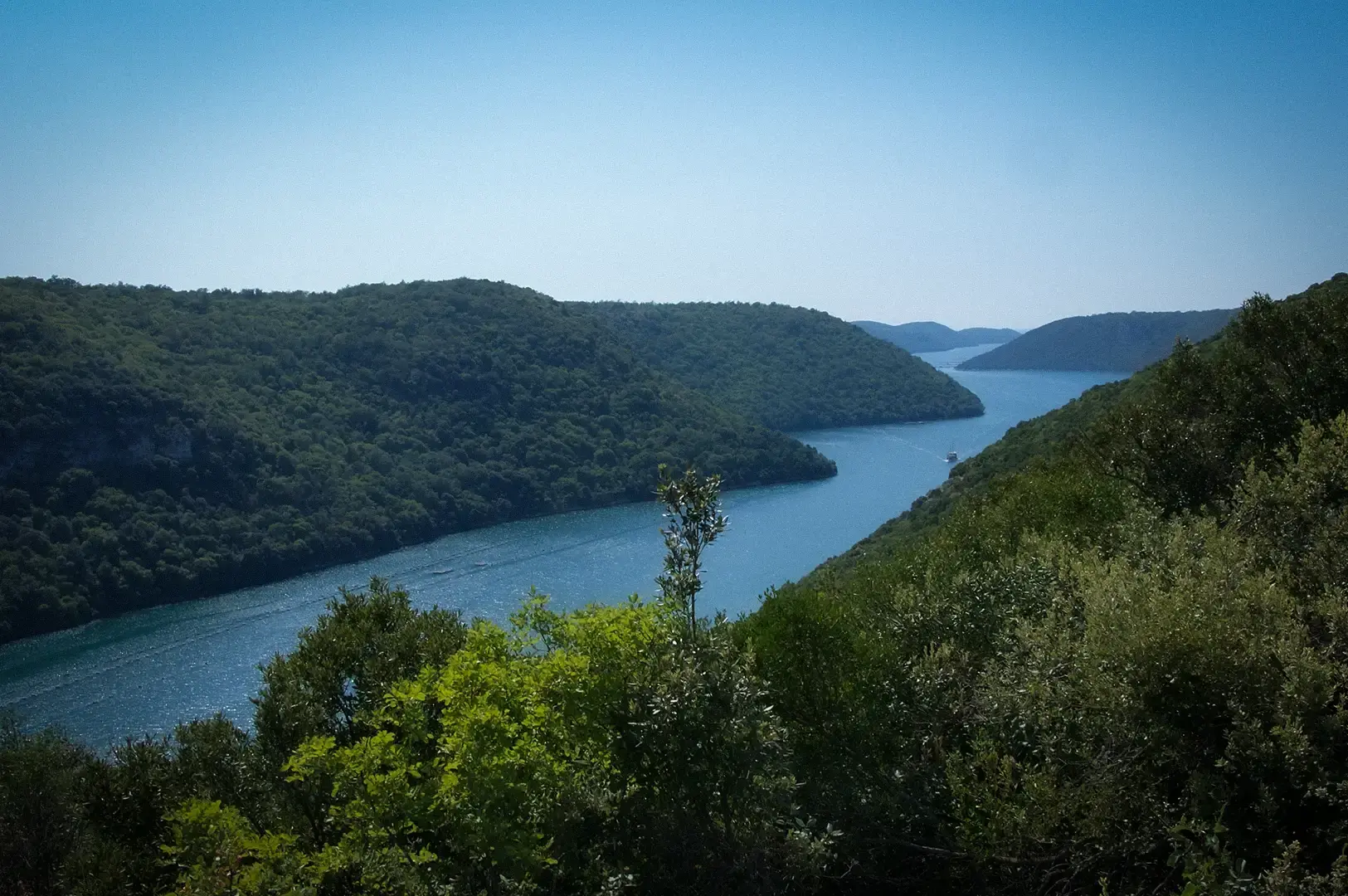
The Lim Channel is a sea inlet roughly 12km long, shaped by karst rock and protected for its landscape. It makes for a wonderful day trip from the town, one of the best in the Rovinj area, and easy to do without filling your schedule around it.
You can reach it by boat, by road, or along cycling and hiking routes. If you rented a car for a day, this is a good moment to use it.
Don’t pair it with five other stops. Give it several hours. Have lunch nearby. Drive or ride back slowly.
Day 7: Do Less
This is the hardest day to plan, because the plan is not to plan.
Return to the café you liked. Swim at your favorite spot again. Walk the street that caught your eye on Day 1. Eat at the restaurant you keep thinking about.
There will always be one more place you could add. Leave it for next time.
Insider Tips for Your Rovinj Trip
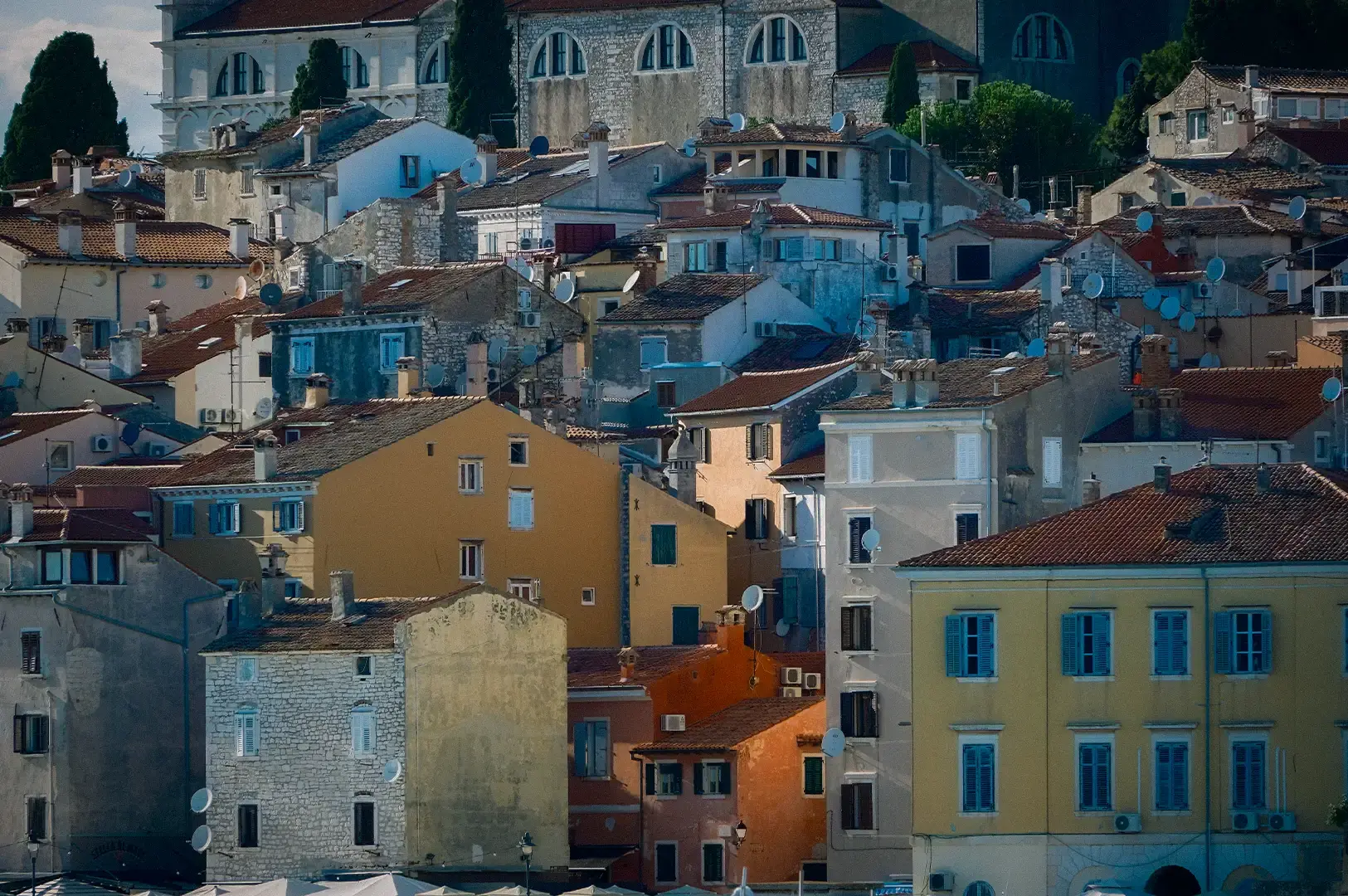
Walk Grisia Street more than once. This winding stone-paved street, located in the heart of the old town centre, has long been where artists work and show their creations. Browse the galleries and independent shops. Talk to the artists if they’re around. Come back at a different hour. The street feels different in morning light than at night.
Know What Plaza Balota Is and Isn’t. The tourism board calls it Baluota, or Balota, one of the rocky beaches around Monte. Getting into the sea often means climbing down rocks or diving from them, which is why it’s popular with adults. There’s no natural shade. Bring water shoes, water, a towel and sun protection. It’s lovely for a swim and sunset, but it isn’t an easy sandy beach. Don’t arrive expecting a calm, sheltered cove — know what you’re coming for and you’ll love it.
Step back from the waterfront to eat. The best restaurants aren’t always the ones with harbor views.
Finding Fresh Seafood and the Best Restaurants in Rovinj
Rovinj’s fishing heritage is still on the plate. Fresh seafood, Istrian olive oil and local wine come up again and again in recent reviews.
Visitors have praised Graciano for its fresh fish, local olive oil and views over the harbor and Old Town. Grongo E Alice has drawn kind words for fresh fish, relaxed service and helpful local recommendations.
But not every waterfront table delivers. Reviews of places such as Cisterna and Pierino include complaints about price, value or seafood quality. Read recent reviews before you sit down.
I’ve found one rule holds well here: walk one or two streets away from the water. The atmosphere quiets. The value often improves. The meal feels more like dinner and less like a view you’re paying for.
Practical Info
- Getting around: No MRT. Walk, cycle, or use buses and taxis.
- Food budget, per person:
- Casual meal: about €12–25
- Seafood or a nicer restaurant: about €25–50+
- Fine dining: €50+
- Free things: Walking the Old Town, swimming along public coastal areas, and spending time in Golden Cape. Individual museums and attractions may charge entry.
- What to bring:
- Walking shoes or sandals with real grip
- A light day bag
- Swimsuit, towel, sunscreen and sunglasses
- Water shoes for rocky beaches
- A reusable water bottle
- On accessibility: The Old Town is steep, cobbled and polished smooth by centuries of footsteps. Rocky beaches like Plaza Balota require climbing. The bell tower is 192 enclosed steps. If mobility is a concern, Golden Cape’s paths and the harbor promenade are gentler options. Plan walks for cooler hours and rest often.
A Calm Takeaway
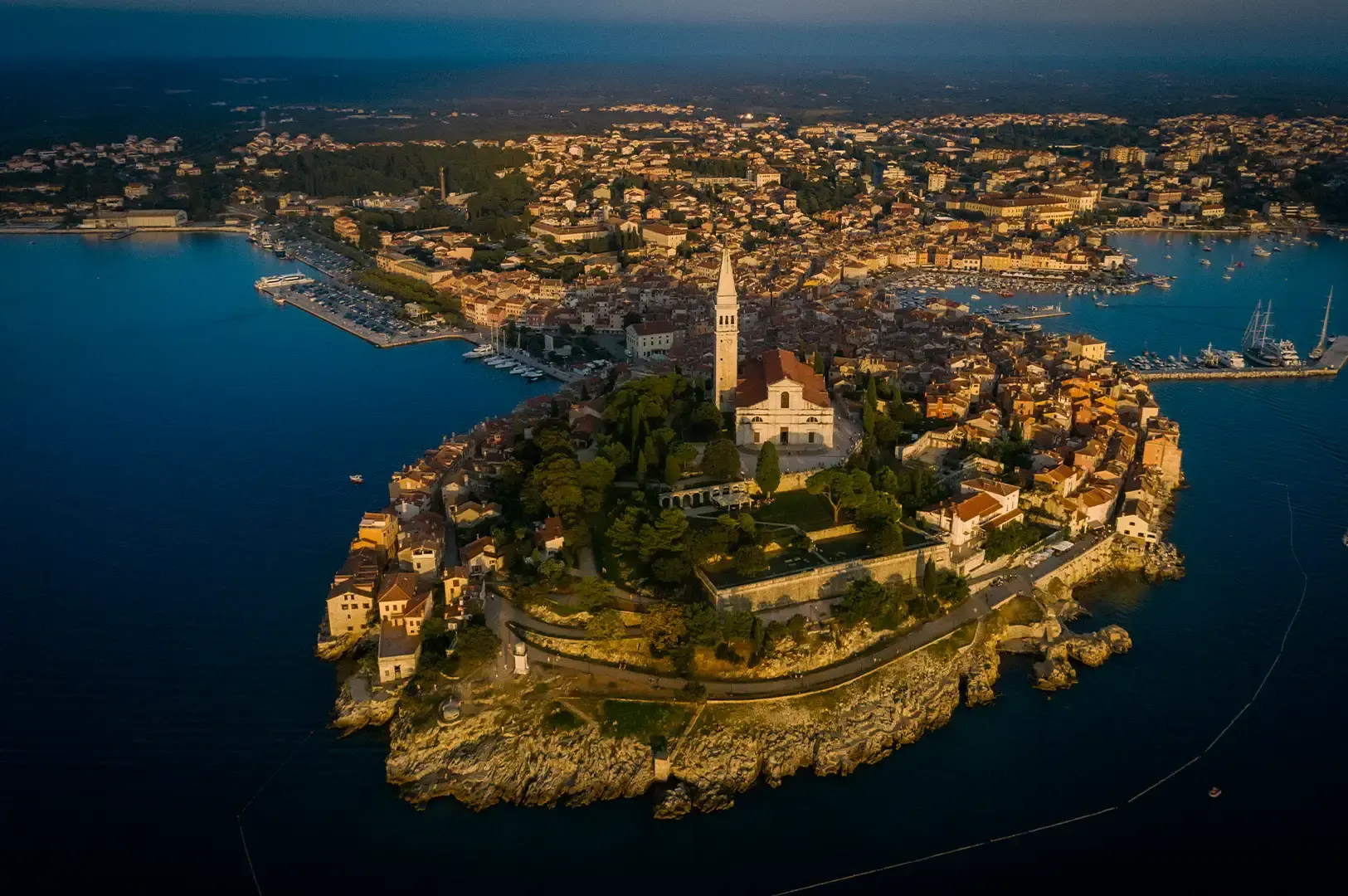
What stays with me about Rovinj isn’t the postcard view.
It’s how close everything sits. Old streets, forest, sea, islands and a fishing heritage you can still see moored at the pier. All of it at walking pace. A small country on Europe’s coast that holds an enormous amount of quiet beauty, if you give it enough time to show you.
Seven days here can feel surprisingly unhurried, as long as you don’t turn them into a checklist. Walk early. Eat a street back from the water. Let the wind decide which day you take the boat.
If this kind of travel suits you, our slower guide to temples, food markets and everyday life in things to do in Bangkok follows the same idea in a very different city.
And on your last evening in Rovinj, go back to the harbor. Sit down. Watch the light leave the bell tower.
You’ll know you stayed long enough.