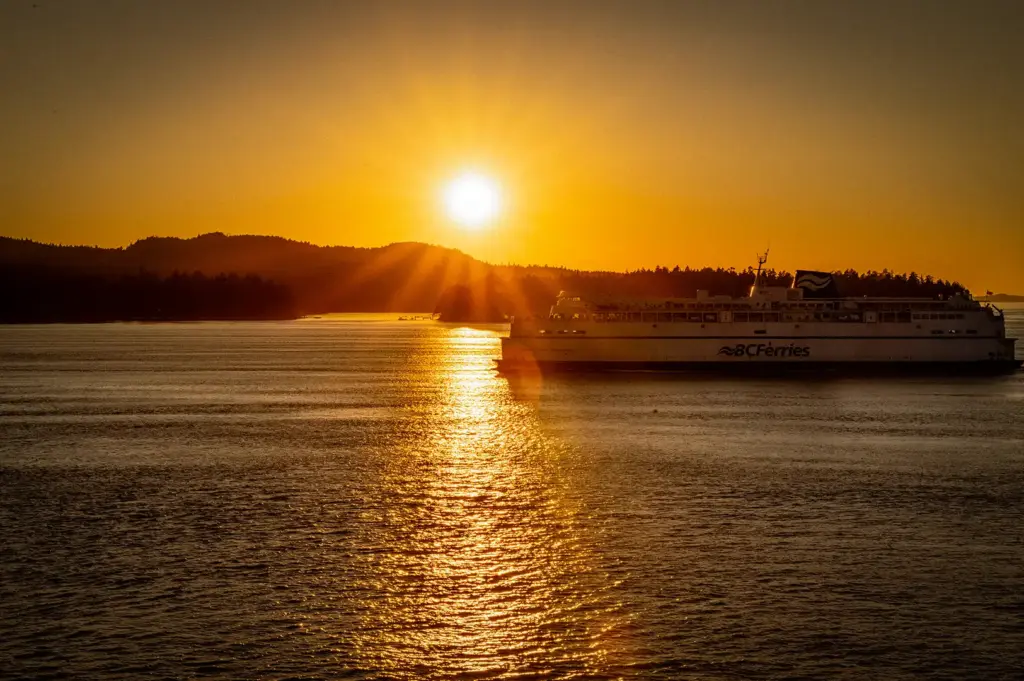
There is a particular kind of travel that begins when the land disappears.
The city gets smaller behind you, the shoreline stretches away, and the engine settles into a steady rhythm. As the ferry moves farther from the coast, there is suddenly nowhere to rush to. You are simply moving across the water, watching one landscape gradually give way to another.
For Singaporean travellers, ferries are usually associated with practical journeys: a way to reach an island, a connection between two coastal destinations, or a short transfer before the actual holiday begins. But slow travel changes the way you look at that journey. The ferry does not simply take you somewhere. It gives you time to experience the distance between places.
This is what makes ferry travel such an interesting form of slow travel.
Unlike a flight, the landscape remains visible throughout much of the journey, while unlike driving, you are not responsible for navigating the route. You can sit beside a window, stand outside when permitted, watch the coastline change, notice boats moving across the water, and observe how the horizon gradually opens. The journey becomes an experience in its own right rather than simply a means of getting somewhere.
Perhaps that is why travelling by water can feel so different.
There is less to do because there are no road signs to follow, no traffic to manage, and no constant decisions about which turn to take. You are simply a passenger. At first, that may feel like a limitation, especially if you are accustomed to making every part of a journey as efficient as possible. Then it starts to feel like freedom.
You cannot make the ferry go faster, so you stop worrying about how quickly you are getting there.
This is a particularly useful lesson for Singaporean travellers because we are accustomed to efficiency. Even our public transport is designed around reducing waiting time, so we check arrival times, calculate transfers, and look for the fastest route. A ferry asks us to accept something different. The journey has its own pace, and because you cannot optimise it away, you can finally pay attention to it.
That changes the experience of distance.
On a plane, you leave one place and eventually appear above another, while the space between them is largely invisible. On a ferry, the distance remains in front of you. You watch the land recede, see open water stretch towards the horizon, and gradually notice another coastline beginning to appear. That transition can be surprisingly meaningful.
You understand that destinations are not isolated points. They are connected by landscapes, water, communities and time.
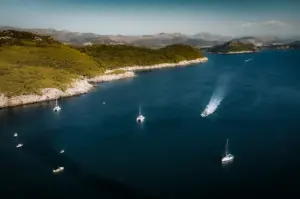
This is particularly valuable when travelling between islands because a ferry can reveal details that would otherwise disappear from the itinerary. You might notice small boats, fishing activity, coastal villages, changing weather, or the shape of the shoreline as it shifts around you. Instead of seeing geography as something represented on a map, you begin experiencing it as something lived and connected to everyday life.
There is also a sensory quality to ferry travel that suits slow travel.
The sound of the engine, the movement of the water, the changing wind, the smell of the sea, the warmth of the sun, and the sudden coolness when clouds move overhead all become part of the experience. These details create a memory of the journey that a photograph cannot completely capture, and because the journey is slower, there is time to notice them.
A ferry ride can also become a natural pause between two parts of a trip.
Perhaps you have just left a busy city and are heading towards a quieter island, with the water creating a transition between the two. You are no longer in the old place, but you have not yet arrived at the new one. That in-between feeling can be valuable because it gives your mind time to catch up with your body. You can think about what you have experienced, talk to the person travelling with you, read, eat something simple, or simply sit without needing to fill the time.
Slow travel is comfortable with the in-between.
That is something modern travel can easily forget. We are often encouraged to treat every transition as an inconvenience: the airport is something to endure, the transfer is something to minimise, and the ferry is simply something that gets you there. But these moments can become part of the memory when we allow them to. The time between destinations does not necessarily need to be removed from the holiday; it can become part of the holiday itself.
A ferry journey also changes the way you arrive. Instead of suddenly stepping from one world into another, the transition happens gradually. The landscape changes, the atmosphere shifts, and your expectations begin to change with them. By the time you arrive, you have already begun adjusting to the destination because the journey has prepared you for it.
This is why ferry travel belongs naturally within slow travel. It does not simply move at a slower speed; it changes your relationship with movement itself. You begin understanding that getting somewhere is not always something to rush through, because sometimes the distance is worth experiencing and the journey deserves its own memory.
Sometimes, the best thing you can do while travelling is simply sit beside the window and watch the world move. The ferry reminds us that travel does not begin when we arrive. It begins the moment we leave.
If you are drawn to coastal destinations where the journey, waterfront, food, and slower pace can become part of the experience, continue with Otaru Slow Travel Guide.