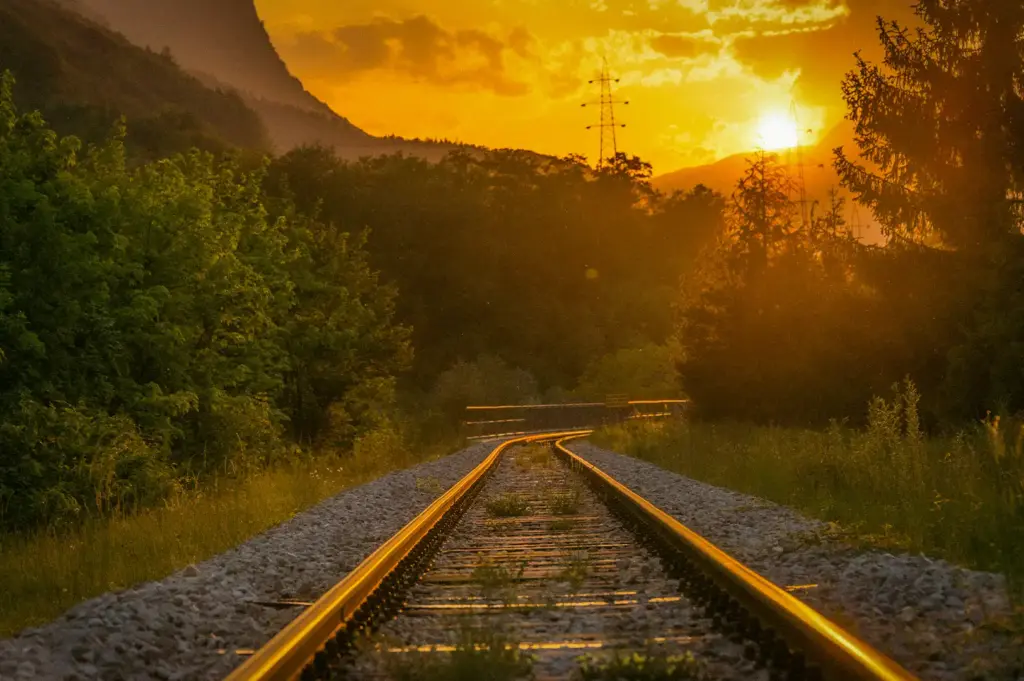
There is something about travelling by train that changes the feeling of a journey.
You are moving, but you are not responsible for the road, which gives you the freedom to look outside, read, talk, eat, sleep, or simply watch the landscape pass. Instead of concentrating on directions or worrying about traffic, you can give your attention to what is happening around you.
For Singaporeans, this can be particularly appealing because train travel is usually associated with getting somewhere efficiently. Our MRT is built around movement: you get on, get off, and reach your destination. Trains elsewhere, however, can offer something very different. The journey itself can become part of the holiday.
This is where rail travel and slow travel meet.
Instead of treating transportation as dead time between destinations, you begin experiencing the journey as part of the destination itself. The landscape changes gradually outside the window, with a city giving way to suburbs, suburbs becoming countryside, and mountains appearing in the distance. Small towns pass by, and you begin seeing how one place connects to another.
A flight can take you from one destination to another in a matter of hours, while a train lets you experience the distance between them. Sometimes, experiencing that distance changes how you understand a place, because the journey itself becomes part of the experience. You become more aware of the landscape, the communities along the route, and the gradual transition from one environment to another.
This does not mean every train journey needs to be long.
Even a short regional journey can offer something a flight cannot because you are seeing the landscape at ground level and watching ordinary life happen outside the window. You notice stations that would otherwise remain names on a map, and you see people getting on and off with their own routines. The train becomes a moving observation point, allowing you to experience the places you pass through rather than simply moving above them.
You are travelling through a place rather than simply arriving in it.
There is also a rhythm to train travel that suits slow travellers. You cannot always speed the journey up, and you cannot decide to skip every town between two major cities.
For Singaporeans used to convenience, being unable to optimise every minute can feel unusual at first. Yet once you settle into the carriage, that limitation can become surprisingly freeing. You stop worrying about what you should be doing and begin allowing the journey to unfold at its own pace.
You might have breakfast while watching the scenery outside, read for a while, or talk to the person travelling with you. You may spend part of the journey doing nothing in particular, simply watching the landscape change. The journey becomes a pause, and that pause has value because it creates space for you to slow down without having to deliberately make time for it.
One of the most beautiful things about train travel is the way it connects major destinations with smaller places. A fast itinerary might take you directly between two famous cities, but a slower rail journey can reveal what exists between them. A station becomes an invitation to look around, a small town becomes a possibility, and a stretch of countryside becomes something you remember long after the journey is over.
This is particularly relevant to slow travel because the spaces between destinations often contain the character that travellers miss when they move too quickly. When the train slows down or passes through a place you had never considered visiting, you are given a glimpse of a part of the country that may never have appeared on a conventional itinerary.
Train travel can also make a destination feel more connected. Instead of treating cities as separate points on a map, you begin understanding the geography between them. You see the transition, experience the distance, and recognise that a destination does not exist in isolation. It belongs to a larger landscape, shaped by the places and communities that surround it.
That is an important part of slow travel. You are not simply collecting places. You are learning how places relate to one another.
For Singaporean travellers planning overseas trips, this can be a useful way to rethink the itinerary. Instead of flying whenever possible, consider whether one part of the journey could be experienced by rail. Not because it is always faster—it often is not—but because speed is not necessarily the point.
A slower train journey can become one of the experiences you remember most because you arrive having seen more than the destination itself. You have seen the journey that led you there.
Perhaps that is what makes rail travel such a natural companion to slow travel. The train does not ask you to rush. It simply carries you forward, giving you the time and perspective to notice what exists along the way.
If you are looking for inspiration on building a longer journey around gentle routes and leaving room between destinations, explore Quiet Days & Gentle Routes: Itineraries in Japan That Leave Space to Return to Aomori.