The first time I went to Pai, I planned to stay two nights. I left after six.
That’s the thing about Pai, Thailand: this small valley town in northern Thailand is known for its slow, relaxing pace, mountain scenery, and the kind of days shaped by rice paddies, hot springs, waterfalls, viewpoints, and Pai Canyon rather than a packed schedule. It doesn’t demand much of you. It just quietly convinces you to stay longer. The mountains soften. The days blur into each other in the best way. And somewhere between a slow coffee overlooking rice paddies and a hot spring soak at dusk, you stop counting the hours.
I’ve been back three times since. Each visit, I do less. And each visit, I remember more.
If you’re the kind of traveler who’d rather sit with a place than sprint through it, Pai rewards you. This guide is built for that kind of trip: how to get to Pai, when to go, what to budget for, what to prepare, and how to spend five slow days here seeing the canyon, hot springs, waterfalls, and scenic viewpoints without rushing. For anyone wanting to experience northern Thailand beyond the usual tourist trail, Pai offers a rare chance to settle into nature, local life, and a slower rhythm that’s easy to miss when you move too fast.
Getting There: The Road That Tests Your Patience
Let’s be honest about the journey first, because everyone talks about it.
The route from Chiang Mai to Pai is roughly 135 kilometers northwest through the mountains, but the drive takes three to four hours. The reason is the road itself — 762 hairpin bends winding up and over the mountains. It’s beautiful. It’s also relentless.
On my first trip, I took the minivan and spent the last hour with my eyes fixed on the horizon, willing my stomach to behave. I lost that battle. So here’s my one non-negotiable tip: take a motion sickness pill about thirty minutes before you leave Chiang Mai. Sit in the front if you can. Keep water and a few dry crackers within reach.
Minivan tickets usually cost 150–250 THB one-way, which is the easiest way for most travelers to reach Pai. Some travelers prefer a scooter rental or motorbike from Chiang Mai, and Aya Service is a common provider people use for that option. Pai Airport no longer serves regular travelers; flights from Chiang Mai to Pai used to take about 45 minutes, so most people now go overland.
If you’re coming from further afield and want to build a slower northern loop, read more here about spending time in Chiang Mai first. I’d suggest a few days there before Pai — it eases you into the pace.
Once you arrive, the town is compact but spread out. Most of what you’ll want to see sits beyond the center, along quiet country lanes. A scooter is the way to go and the best way to explore Pai.
When to Visit: The Cool Season Is Worth It
I’ve come in different seasons, and if you have a choice, visit Pai between November and February.
This is the high season, and also Pai’s cool and dry season. Mornings carry a crispness that feels almost foreign for Thailand. The valley views stay clear. The rice paddies glow. And the evenings ask you to reach for a light layer, which somehow makes the whole town feel cozier.
Yes, it’s busier then. But Pai never feels overwhelming, even at its fullest. The trade-off is worth it. The wet season runs from June to October and brings lush green and quiet trails, but slippery waterfall paths and grey skies that hide the mountains. March to May is the burning season, when hazier valley views are more common.
Day One: Arriving Slowly and Pai Canyon at Sunset
Don’t plan much for your first day. You’ll be road-weary.
Check in, rent a scooter — most places charge around THB 100 to 150 a day — and just wander Pai town on foot. Find a café. Let the valley reintroduce itself.
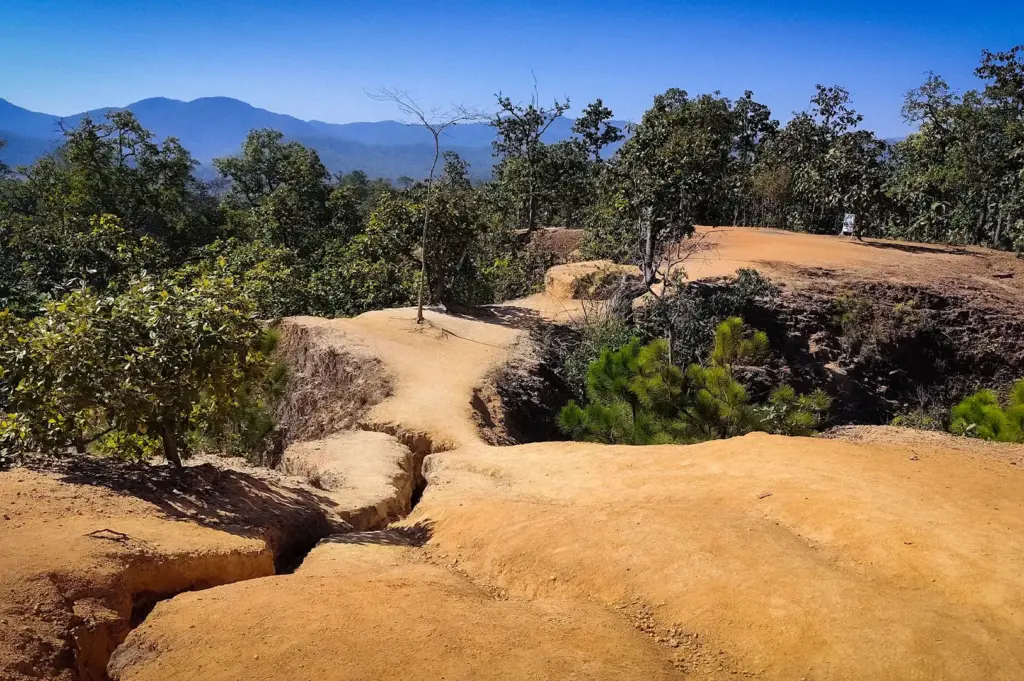
In the late afternoon, ride out to Pai Canyon, also called Kong Lan. It’s one of the more popular Pai Thailand attractions, and for good reason. The narrow ridges of red earth, 30-meter cliffs, and hiking trails make it an amazing place to catch stunning views as the whole place turns gold when the sun sinks behind the hills.
Wear proper shoes here. The trails are uneven and the drops are real — I’ve watched people in flip-flops inch nervously along the spines. Arrive an hour before sunset, find a quiet ledge, and just sit. The crowds thin as the light fades. That’s when it’s best.
Day Two: Hot Springs and the Night Market
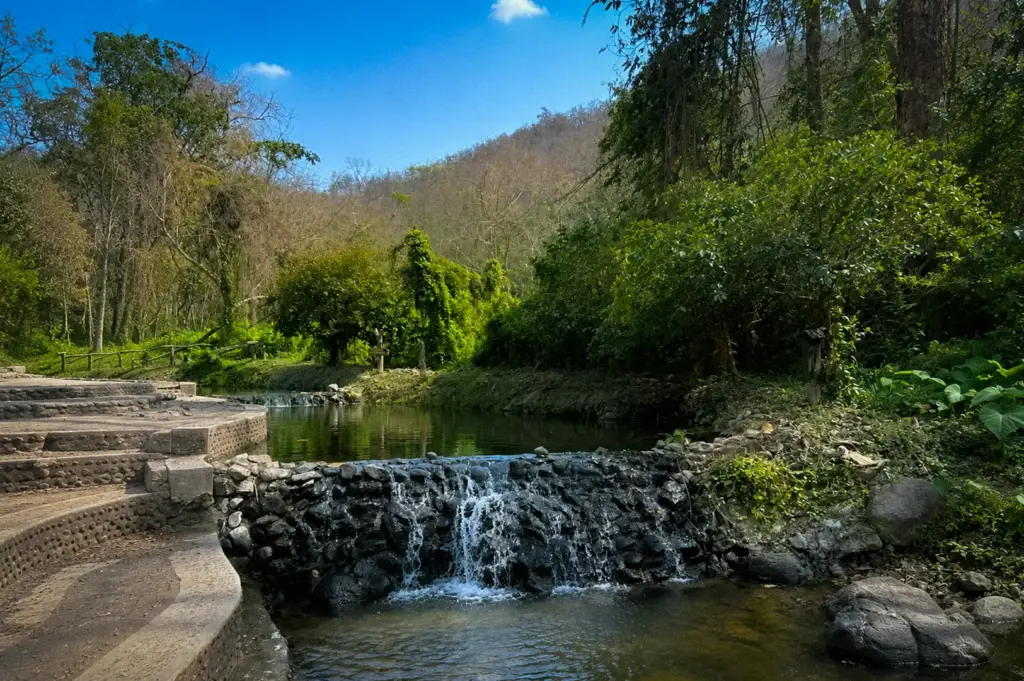
Start gentle. A slow breakfast, then ride out to Tha Pai Hot Springs, tucked into a jungle setting a short way from town. Entry runs a few hundred baht for foreigners. The thermal pools sit among the trees, and water near the source at the hot springs pai can reach about 80°C, hot enough to cook an egg — locals do exactly that.
Bring swimwear and a towel. Go earlier in the day before it fills up.
If you want somewhere quieter, Sai Ngam Hot Spring is my preference. It’s further out and less commercial — a natural stretch of warm river where the water pools between rocks and roots. The adult entrance fee is 400 THB. On my third visit I discovered I could spend a whole afternoon there and barely see another soul. Bring cash; there’s little else out that way.
In the evening, wander Pai Walking Street. The Pai Night Market comes alive after dark, and it’s the social heart of town. It runs daily from 6 p.m. to 10 p.m., with multiple stalls selling food, souvenirs, local products, and international cuisine. This is where slow days find their warmth.
Day Three: Rice Paddies, Bamboo Bridge, and Waterfalls
This is my favorite day.
Ride out through the countryside toward So Bamboo Bridge — a long, handmade walkway of about 800 meters that stretches across the rice fields toward a small temple. There’s a 30 THB entrance fee. Early morning is the time to go, before the day heats up and the light is still soft over the paddies. Walking it slowly, with the fields spreading green on either side, is one of those quiet moments Pai gives freely.
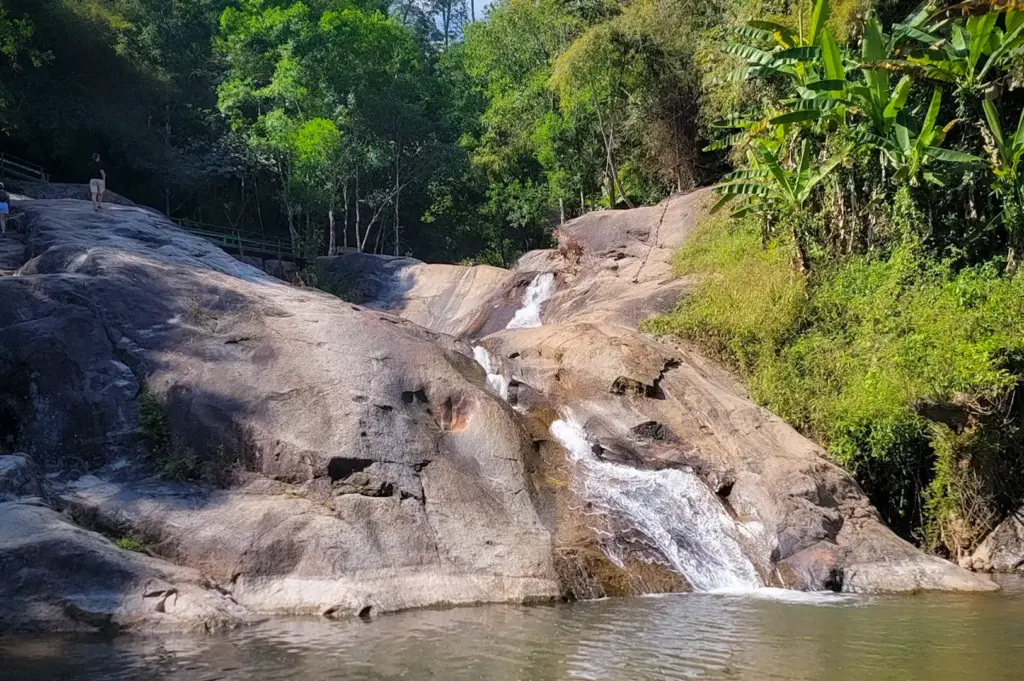
From there, chase a waterfall or two. Mor Paeng Waterfall, also known as mo paeng waterfall, is about 12 km from Pai and has flat rocks you can slide down into shallow pools. There is no entrance fee, and the pools below make a natural swimming hole. Pam Bok Waterfall sits in a narrow gorge, cooler and more sheltered. Both are best in the morning, before the tour groups arrive around midday.
Among the things to do in Pai Thailand, these countryside loops are what stay with me most. Not the sights themselves, but the riding between them — passing farms, waving at children, stopping when something catches your eye.
Day Four: A Sunrise Worth the Alarm
Set your alarm early. Really early.
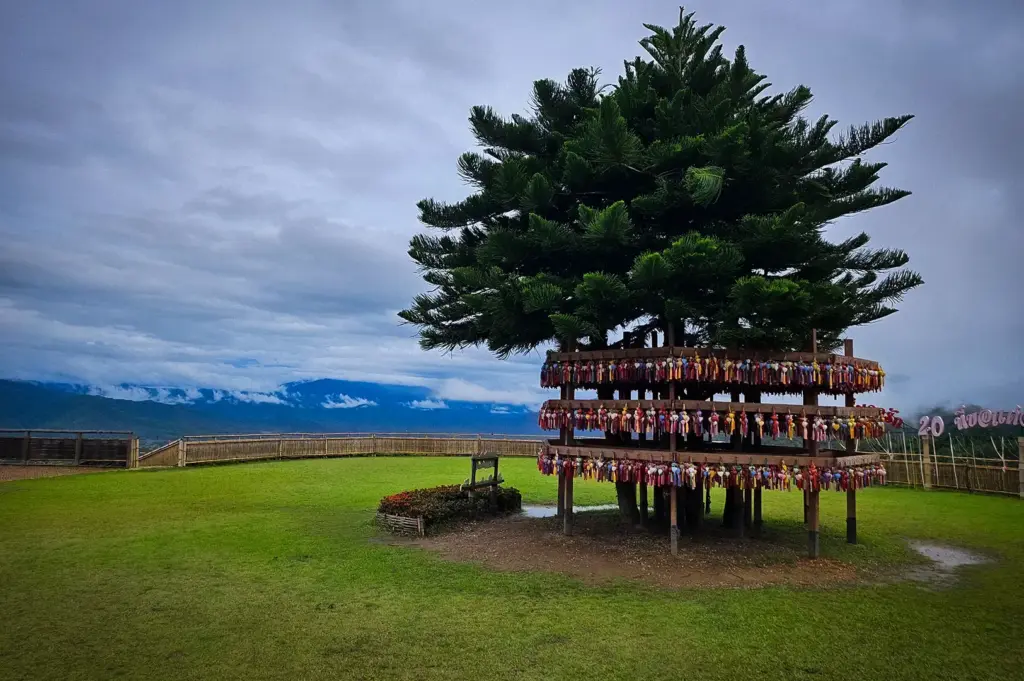
Yun Lai Viewpoint sits above a Chinese village on the edge of town, and at dawn it often floats above a sea of low cloud filling the valley. Order a warm tea from the small stall up top, wrap yourself in a layer, and watch the mist burn off as the sun climbs.
It’s cold up there before sunrise, so bring more warmth than you think you’ll need. I made that mistake once, shivering in a t-shirt in what felt like the only place in Thailand where that could happen, while everyone around me clutched hot cups and cozy jackets.
Spend the rest of the day recovering slowly. A long lunch. A hammock by the river. Pai doesn’t mind if you do nothing.
Day Five: A Climb and a Goodbye
For your last full day, earn a view.
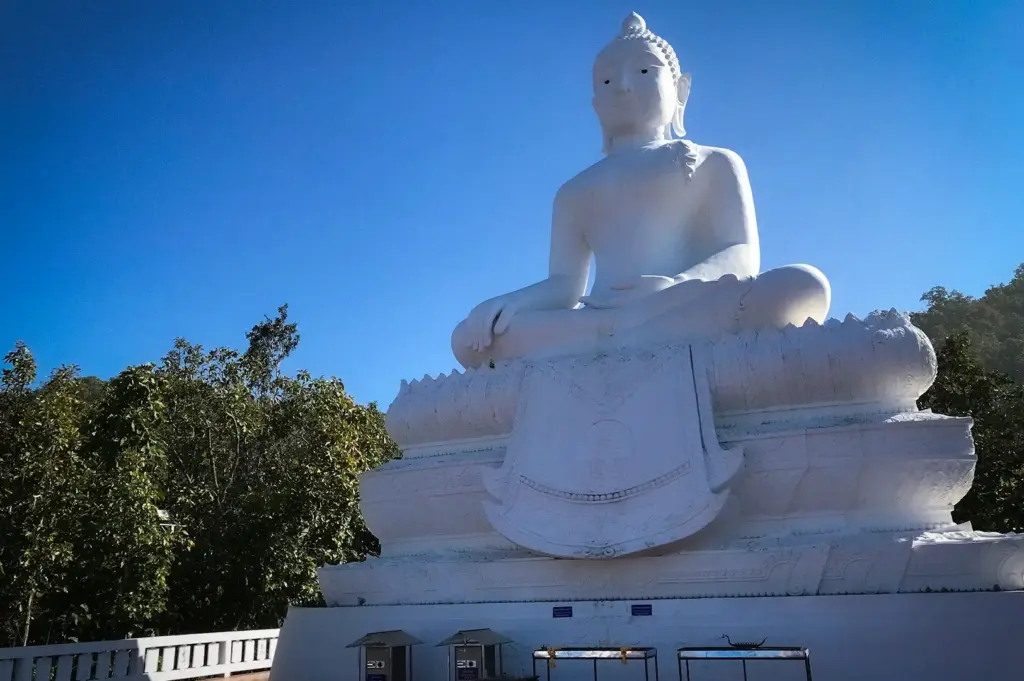
Wat Phra That Mae Yen — the temple on the hill, marked by a big Buddha statue — looks out over the whole valley. You can ride up, but I prefer the climb: a long set of steps that leaves you a little breathless and grateful at the top, and it’s one reason Pai worth visiting feels obvious once you’re there. Go in the late afternoon, when the heat has eased and the light turns the town below to amber.
If you’ve still got energy, Mae Yen Waterfall is a proper adventure — roughly a 2.5-hour jungle hike with 88 river crossings that involves wading through the stream itself. It’s not for a quick visit. Give it most of a day, wear shoes you don’t mind soaking, and go with someone if you can.
Then, one final night market. One last plate of khao soi. And the quiet realization that, like me, you might come back.
Insider Tips I Learned the Hard Way
A few honest things, gathered over four trips:
Carry cash. Many vendors, rural stalls, and remote hot springs take Thai baht only. The ATMs in town can run dry during peak season, so withdraw enough in Chiang Mai before you leave.
The scooter is essential, but ride carefully. The countryside roads are gravelly and quiet, and the loose surface near waterfalls has caught out plenty of first-timers. If you’ve never ridden, start slow on the flat lanes near the town center.
Avoid crowds by being early. Waterfalls before 10am, viewpoints at dawn, hot springs mid-morning. The tour buses follow a predictable rhythm, and most hotels or tour desks can help arrange tubing or transport — just move ahead of it.
Practical Notes
Pai is kind to a budget. On the lower end, you can travel comfortably on around USD 12 to 25 a day — a simple guesthouse, street food, and a scooter. Mid-range, with nicer rooms and café mornings, sits closer to USD 30 to 55. Among the best hotels and guesthouses, options run from simple private bungalows to luxury stays. Pairadise Guesthouse has private bungalows from about $20 a night with private bathrooms, Pai Island Resort offers luxury rooms with Super King Beds, and Canary Guesthouse is near Pai Walking Street. Paddy Fields Haven has bungalows overlooking rice fields, while Baan Pai Riverside offers riverfront bungalows in Pai town.
Pack light but thoughtfully. Swimwear and a towel for the springs and falls. Layers for cool mornings and evenings. Sturdy shoes for the trails. Sun protection for the open middle of the day, and a light rain jacket if you’re visiting outside the dry months. Pai is also known for its relaxed café culture and lively nightlife, with great restaurants and some of the best restaurants adding to the town’s easy appeal. For food, Centrico does excellent Mexican food, Northern Soul Pai focuses on ancient Northern Thai dishes, and the vibrant cafe scene even includes a garden cafe feel at spots serving bom bowls.
If you want a fuller working draft of this itinerary with more detail, you’ll find it here: https://slowtravels.com.sg/5-best-hotels-in-seoul-south-korea-for-a-10-day-stay-where-comfort-meets-slow-travel/
A Last Thought
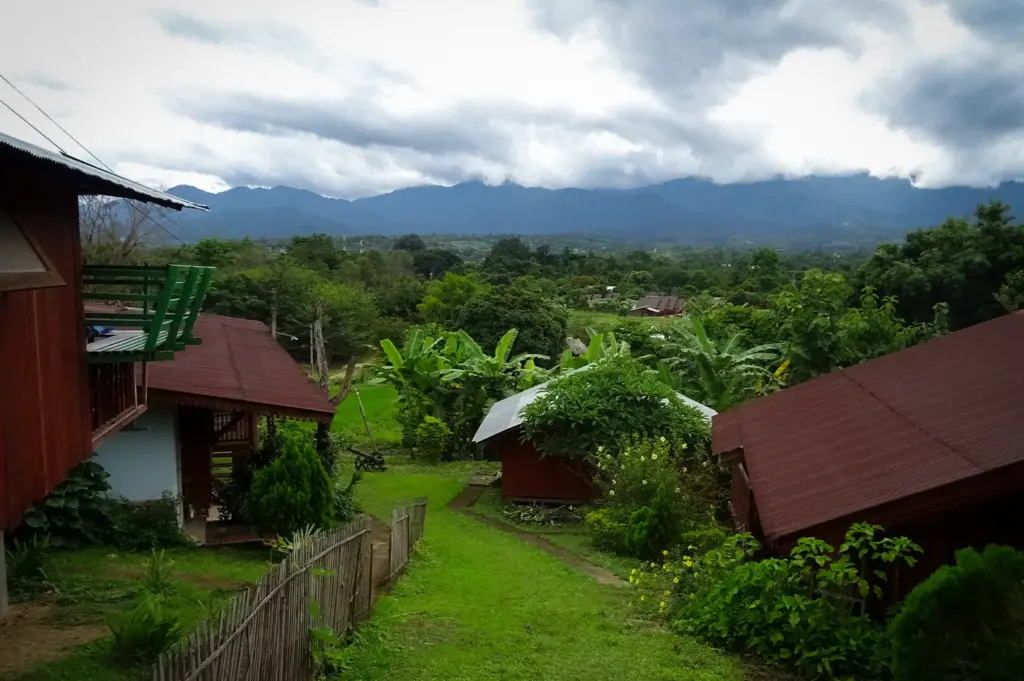
Pai Thailand isn’t a place you conquer. It’s a small town in Mae Hong Son province, in northern Thailand, that you settle into. It also carries a mix of Thai, Shan, and hill-tribe influences.
The valley doesn’t hand over its best moments to those in a hurry. They come quietly — in the mist over Yun Lai, in the warm river at Sai Ngam, in the slow ride home as the light fades.
If you’re visiting Thailand, this is reason enough to visit Pai, with part of the pull being the chance to explore waterfalls, enjoy street food, and ease into the slower rhythm of Mae Hong Son. Give it five days. Do less than you planned. Let it keep you a little longer than you meant to stay.
It kept me. Three times over.