The first time I got Pai’s weather wrong, I was standing at the edge of Pai Canyon in a soaked cotton shirt, watching a wall of grey roll down the valley.
It was August. I had ignored every quiet warning — the heavy morning air, the way the hills had gone hazy by noon. I thought I’d beat the rain. The rain had other plans. If you’re searching for Pai Thailand weather, the short answer is this: Pai moves through three clear seasons — cool and dry from November to February, hot from March to May, and rainy from June to October, with short afternoon downpours especially common in August.
I’ve been back in every season since. And what I’ve learned is simple: Pai’s weather isn’t something to endure. It’s something to travel with. Once you stop fighting it, the days open up. That’s what this guide is here to help with for anyone planning a trip to Pai: how the seasons actually feel, what to wear, when to head out for hikes and canyon views, how to time days around sun and rain, what rainy afternoons are good for, and how to avoid the common weather mistakes that can throw off the trip.
Whether you’re coming up from Chiang Mai for a few days or slowing down longer, understanding Pai’s weather makes the difference between packing wrong, missing the best hours outdoors, and settling into the town’s pace with a lot less friction.
Let me share what I wish someone had told me before that first drenched afternoon.
The Three Seasons of Pai Thailand Weather
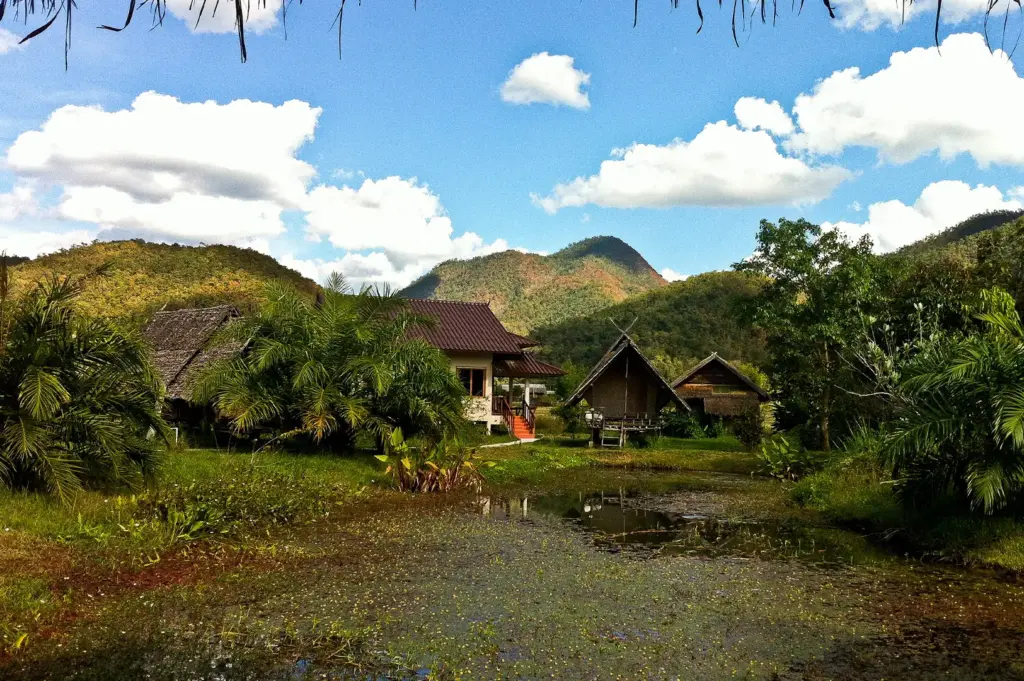
Pai sits in a mountain valley, and its climate follows a tropical rhythm split into three broad seasons. Each one changes how the town feels, how you move through it, and what you’ll want on your back.
Cool and dry (November to February). This is the season most people mean when they say Pai is beautiful. Mild days, crisp nights, clear skies over the rice fields. Mornings can dip cooler than you’d expect — I’ve reached for a jacket at dawn more than once. It’s the easiest season for walking, hiking, and slow scooter rides.
Hot (March to May). Temperatures climb past 30°C, and the midday sun sits heavy. But early mornings and late afternoons still belong to you. This is when I lean hardest into slow rhythms — a sunrise outing, then a long retreat into shade.
Rainy and wet (June to October). The valley turns impossibly green. Waterfalls swell. Crowds thin. The rain, in my experience, isn’t the constant curtain people fear — it’s more often a heavy afternoon burst that clears as quickly as it came.
Each season rewards a different pace. None of them ruins a trip if you plan around the weather instead of against it.
Pai Thailand Weather in August: What to Really Expect
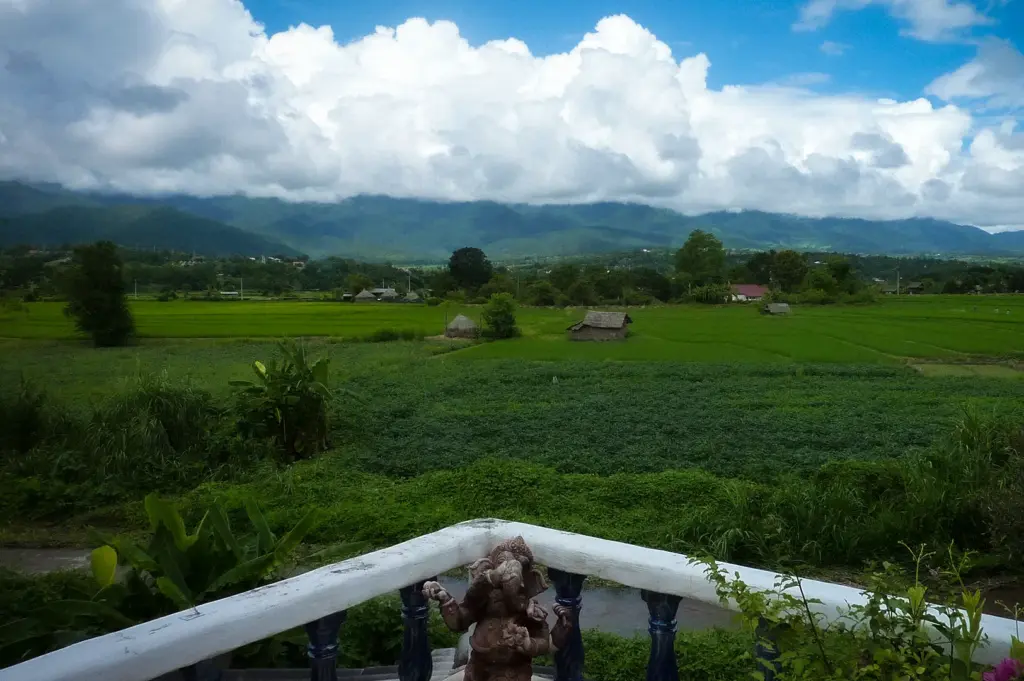
Since August catches so many travelers off guard, it deserves its own honest word.
Expect highs around 28°C and lows near 20°C, with the temperature staying fairly steady between warm afternoons and mild evenings. Warm, but not brutal. The humidity is the real character here — it hangs in the air, especially before a storm.
The rain is frequent, almost daily, but it has a pattern, with wet-season rainfall and high precipitation shaping the month. April, by comparison, averages about 7 rainy days, which helps show how much wetter August feels. Mornings often stay clear. The skies gather through midday, and the heaviest showers land in the afternoon. They’re short and dramatic, then gone.
That rhythm is a gift once you learn it. My best days in Pai Pai Thailand have been in August — sunrise walks under open skies, an unhurried lunch, then the sound of rain on a café roof while I read and let the day soften.
Alex’s Tip: Don’t cancel your plans based on the morning sky in August. Pai’s valley creates localized microclimates. It can pour on one hillside while the sun blazes on another. I’ve watched rain fall across the river while I stayed dry with my coffee. Wait twenty minutes before writing off an afternoon, because overnight lows stay near 20°C and even at night the air usually feels mild.
Pai Thailand What to Wear, Season by Season
Packing for Pai is less about volume and more about smart choices. I’ve over-packed and under-packed both, and the sweet spot is lighter than you’d think.
Here’s what earns its place in my bag:
Breathable layers. Cotton or moisture-wicking shirts for warm days. In the dry season, add a light jacket for cool mornings and evenings.
A packable rain jacket or poncho. Non-negotiable from June through October. I keep mine in my scooter storage at all times.
Quick-dry pants or shorts. After my soaked-cotton lesson, I switched to quick-dry materials. When you get caught in a shower, you’re comfortable again within the hour.
Sturdy shoes with grip. The trails around Pai Canyon and the waterfall paths turn slick after rain. Good footing matters more than you’d guess.
Sun protection. Hat, sunglasses, SPF 30 or higher. The open canyon ridges and rice-field walks offer almost no shade.
Timing Your Days Around Sun and Rain
Slow travel doesn’t mean drifting without a plan. It means shaping your days around the weather’s natural rhythm so nothing feels rushed.
Here’s the pattern I’ve settled into after several visits:
Rise early. The mornings are cooler, clearer, and quieter in every season. This is when I do anything active or scenic.
Slow down through midday. As the heat or the clouds build, I move indoors — a long lunch, a café, a hammock.
Return outdoors in late afternoon. Once the worst heat passes or the rain clears, the light turns golden and the town exhales.
This rhythm works year-round. You just shift the emphasis. In the hot season, midday shade is survival. In the rainy season, midday cover is timing. Same shape, different reason.
Morning Hikes: Mae Yen Waterfall and the Cool Hours
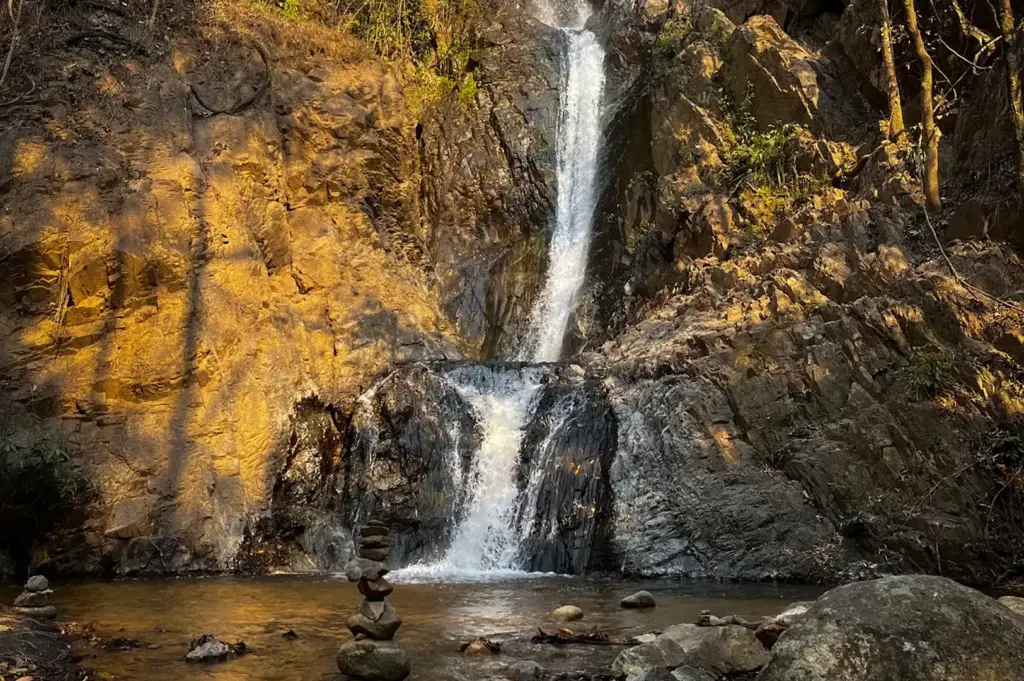
The best outdoor moments in Pai happen before the day heats up.
Mae Yen Waterfall is a proper adventure — a longer trek that has you wading through the stream itself. Do this early, and only in drier conditions. After heavy rain, the water runs high and the footing gets treacherous. I made the mistake of starting too late once and turned back halfway, sweating and unsure of the current. Give it most of a morning, wear shoes you don’t mind soaking, and go with someone. If you want a gentler walk, the Bamboo Bridge is an 800-meter path over the rice fields.
Pai Canyon is the other morning favorite. The red-earth ridges are dramatic at any hour, but the early light is gentler and the crowds haven’t arrived. Wear real shoes here. The drops are steep and the paths are narrow. Wat Phra That Mae Yen sits on a hill, and that mae yen is another good climb for morning views. If you want something farther out, Nam Lod Cave is about 30 miles north of town and requires a guide, so it is more of a long ride than a casual early outing.
My tip: In the rainy season, the waterfalls near Pai reach their fullest, most powerful flow. It’s genuinely worth the flexible planning. The trade-off for a few soggy afternoons is scenery most dry-season visitors never see.
Rainy Afternoons and Warm Water: Pai’s Hot Springs
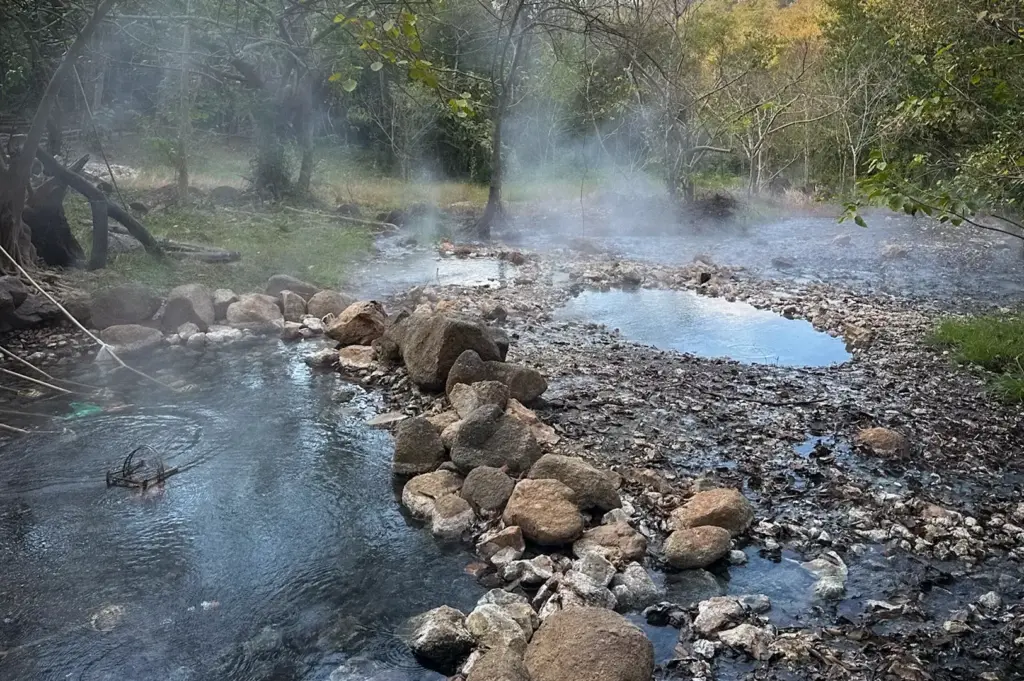
When the afternoon rain settles in, I’ve learned to stop resisting and start soaking.
Pai has two main hot springs: Tha Pai and Sai Ngam. Pai’s hot springs are made for grey skies. There’s something quietly perfect about sinking into warm water while rain falls through the trees around you. Tha Pai Hot Springs sits in a jungle setting a short ride from town, with thermal pools hot enough near the source to cook an egg.
For somewhere quieter, I prefer Sai Ngam Hot Spring — further out, less commercial, a natural stretch of warm river pooling between rocks and roots, and it usually has fewer people, so it feels more tranquil. On a wet afternoon, I’ve had it nearly to myself. Bring cash; there’s little else out that way, and a soak here on rainy afternoons is a unique experience.
Café Hours, Khao Soi, and the Best Restaurants for Slow Days
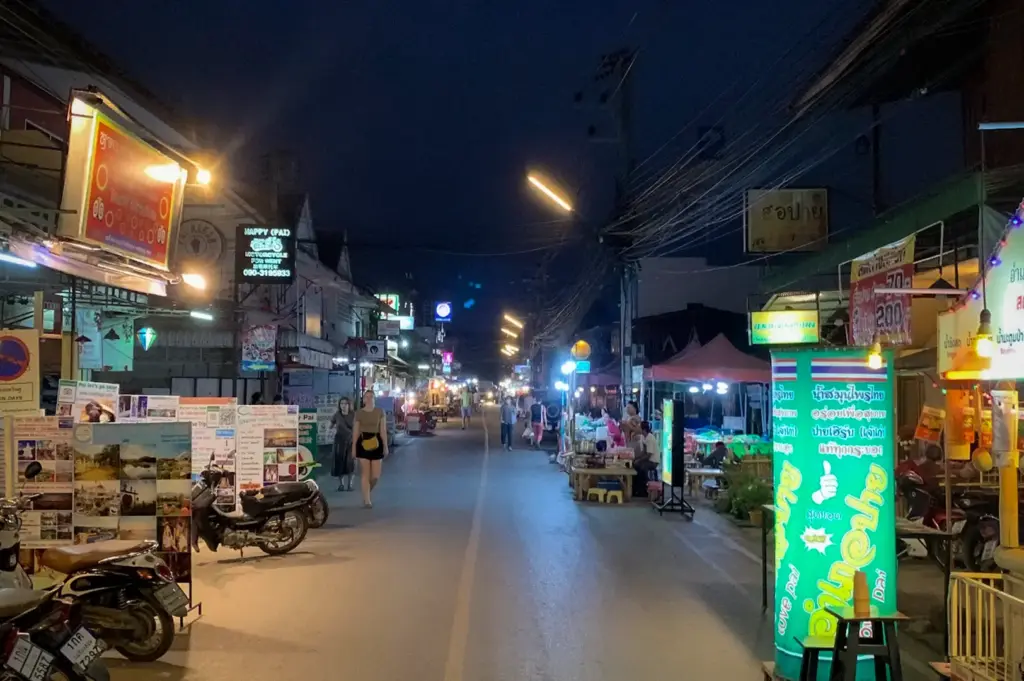
Pai’s café culture exists, I’m convinced, because of the rain.
When the sky opens, the town’s small coffee shops and eateries become the whole point. Many of the best restaurants here overlook rice paddies or the river, and there’s no better place to wait out a downpour than a quiet table with a warm bowl in front of you. Often, that unplanned café stop turns into dinner once the rain eases.
That warm bowl, for me, is always khao soi — northern Thailand’s curried noodle dish, rich and gently spiced, topped with something crisp, and one of the classic Thai food staples in Pai’s local food scene. It’s the taste I associate most with sheltering from an afternoon storm. The rain outside, the broth in front of me, a plastic spoon, no rush anywhere. Those are the hours that stay with me long after the trip ends.
After dark, pai walking street gives the town’s walking street and main street atmosphere its pulse, with the Pai Night Market running daily from 5 to 10 p.m.; it’s a fun place to eat, browse stalls, and meet other travelers, with bars nearby keeping things lively at night — one of the best things not to miss on a slow evening.
If you’re mapping out how many days to give the region, one working itinerary I keep returning to lays out the full pacing for a slow Pai visit — for those planning a longer stay across northern Thailand, this detailed breakdown helped me stop cramming and start lingering.
Weather and Getting Here: The Road from Chiang Mai
However you time your trip, you’ll almost certainly arrive by road.
There are no easy flights straight into Pai for most travelers, and Pai Airport is not a practical option, so the usual route is a minivan from Chiang Mai that takes about 3 to 3.5 hours. The way in is a scenic three-to-four-hour drive from Chiang Mai, winding through 762 hairpin bends up and over the mountains, with Mae Hong Son and Mae Hong Son Airport more of a regional footnote than a common arrival plan. It’s beautiful and, if you’re prone to motion sickness, punishing. A tablet thirty minutes before you leave makes all the difference. The bus station and local tour agencies are where most people sort vans or onward travel.
Weather shapes this journey too. In the rainy season, the road can turn misty and slow, so give yourself more time and don’t book a tight arrival; in high season, it’s smart to book transport 2 to 3 days ahead. Scooter rental is common in town for local exploring, while private transfers from Chiang Mai cost about 2200 baht. If you want to ease into the pace of the north before Pai, spending a few unhurried days exploring the temples and slow corners of the larger city first is worth it — this guide to unhurried sightseeing across Chiang Mai’s quieter corners maps it out well, and sorting your accommodation before you travel makes the arrival smoother.
Frequently Asked Questions
When is the best time to visit Pai? For easy outdoor weather and clear valley views, the cool dry season from November to February is hard to beat. But it’s also the busiest high season, so accommodation fills faster. If you’d rather have lush scenery and quiet trails, the rainy season has its own reward.
Is August too rainy to travel? No. The rain is frequent but usually confined to short afternoon bursts. Plan your mornings for activity and keep your afternoons flexible, and August can be one of the most beautiful, uncrowded times to visit. The wet season can still be fantastic for green scenery and fewer crowds if you plan flexibly.
What should I wear? Breathable layers, a packable rain jacket, quick-dry pants, sturdy grippy shoes, and solid sun protection. Add a light warm layer for cool mornings in the dry season.
Do I need cash? Yes. Many small vendors, rural stalls, and remote hot springs take Thai baht only, and town ATMs can run dry in peak season. Withdraw enough before you leave Chiang Mai. Some sights charge an entrance fee, while others, such as Mo Paeng Waterfall, are free.
How do you get around Pai? A scooter is the easiest way to reach many of the top activities around town and in the surrounding countryside. For tubing, most hotels and tour agencies can arrange it for you.
Should I book my trip back to Chiang Mai in advance? Yes, especially in peak months. Van tickets can sometimes take up to two days to secure, so booking ahead matters.
A Last Word Before You Pack
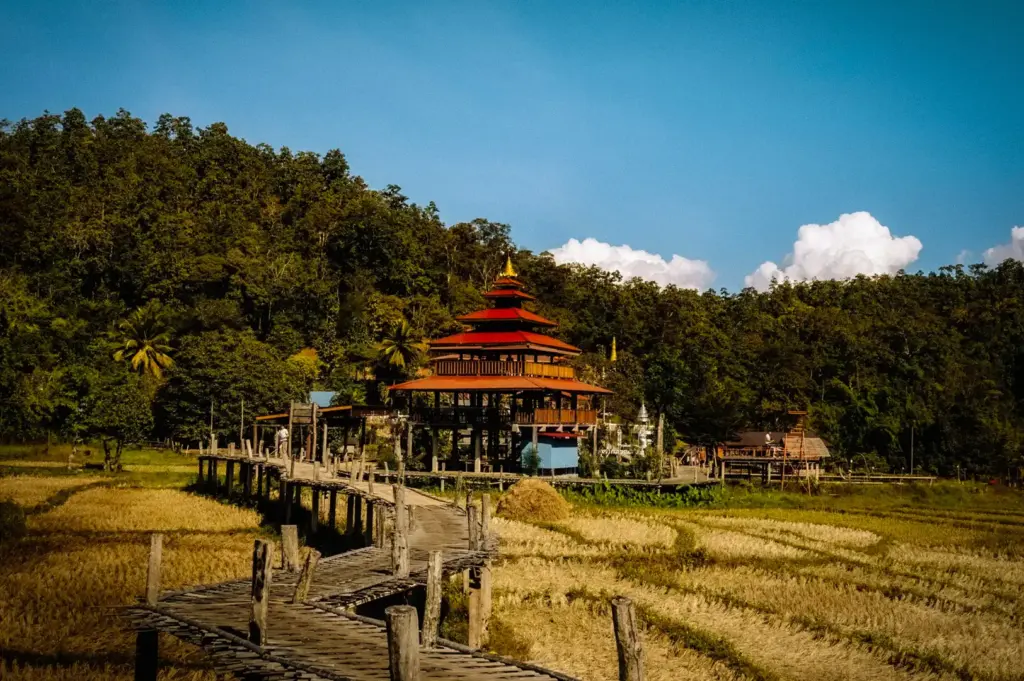
Pai taught me that weather isn’t the enemy of a good trip. It’s the shape of it.
The mist over the valley, the afternoon rain on a café roof, the warm spring at dusk — these aren’t interruptions. They’re the memories you carry home, especially in a town shaped by friendly people, where even a week gives the slower rhythm time to sink in.
So check the season. Pack the layers. Bring the dry bag and the repellent. Then let the sky decide the pace, and follow it slowly.
That first soaked afternoon at the canyon? I’d go back and do it again. Just with a rain jacket this time, and with the best course being to plan slowly so there’s still room for the best things around town.