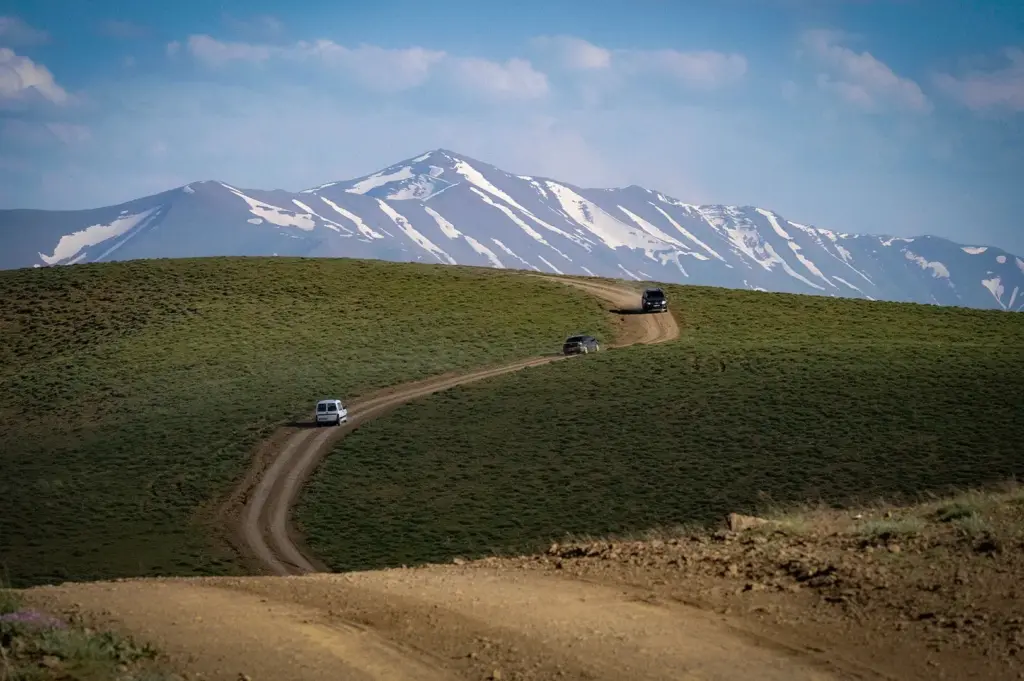
There is something wonderfully simple about a road trip.
You have a destination, a car, and a road connecting the two. But somewhere along the way, road trips became another exercise in efficiency. We calculate the fastest route, choose the quickest rest stop, check how many hours remain, and arrive at the destination believing that the journey has been a success.
Slow travel asks us to reconsider that idea. What if the road itself was the reason for going?
For Singaporean travellers, the road trip often means leaving the island and heading somewhere nearby. Malaysia is an obvious possibility, whether that means driving towards Malacca, Ipoh, Penang, or further north. The temptation is to make the drive as efficient as possible, especially when the journey is treated simply as the necessary part between one destination and another.
But a slow road trip works differently.
You do not simply drive from one city to another; you allow the landscape between them to become part of the experience. That might mean stopping at a roadside food stall because something smells good, taking a small detour because a town looks interesting, pulling over somewhere scenic, or spending longer over lunch than originally planned.
The point is not to turn every roadside stop into an attraction. It is to remove the assumption that everything between Point A and Point B is simply something to get through. The road becomes part of the destination.
Once you think about a road trip this way, the way you plan begins to change as well. Instead of asking how quickly you can arrive, you begin asking where you might want to pause. A slower road trip does not necessarily require a longer route; it requires a different attitude towards time.
Perhaps you choose a route because it passes through smaller towns, avoid planning every meal, or leave an afternoon completely open. These decisions may seem small, but together they create room for discovery. And discovery is one of the reasons road trips remain so appealing in the first place.
There is a particular freedom in seeing something from the window and deciding to stop.
You are not following a tour guide or working through a fixed sequence of attractions. You are responding to the landscape in front of you, allowing the journey to change slightly because something has caught your attention.
This is where slow travel and road trips fit naturally together.
The car gives you mobility, but slow travel gives that mobility intention. You are not moving simply because you can; you are choosing when to move and when to stay. The freedom of having a car becomes less about covering more distance and more about having the flexibility to decide how you want to spend your time.
There is also something different about seeing a place from the road. A train can move quickly between cities, while a flight removes the landscape altogether. A road keeps you connected to the spaces in between, allowing you to watch the landscape change gradually as buildings become farmland, farmland becomes forest, and a busy town gives way to a quiet village.
You notice these changes because you are moving through the landscape rather than above it.
For Singaporeans, this can be a refreshing contrast. We live in a compact city where destinations are rarely far apart, and our roads and transport networks are designed to get us somewhere quickly. A road trip introduces another possibility: maybe getting somewhere slowly is part of the experience.
The slower pace can also change the experience of travelling with other people. There is a social side to road trips that becomes particularly noticeable when there is no need to rush towards the next stop. Someone plays an old song, a discussion starts, and a joke becomes a running theme for the rest of the journey. Someone spots a strange roadside sign and everyone laughs.
These moments cannot be scheduled because they emerge naturally from the time created by the journey.
A fast trip focuses attention on arrival, while a slow road trip creates memories along the way. Even getting slightly lost can become part of the story, provided there is enough time and flexibility to treat the unexpected turn as part of the experience rather than another problem to solve immediately.
Of course, slow does not mean careless. Road safety, rest breaks, fuel planning, weather, and driving conditions still matter. A relaxed journey is only enjoyable when everyone has enough energy and time to travel safely. The point is simply to leave enough space that the journey does not feel like a race.
Perhaps that is the greatest difference between the two approaches. A conventional road trip asks, “How long until we get there?” A slow road trip asks, “What might we discover before we do?”
And suddenly, the destination is no longer the only thing that matters. The roadside café matters because it gave you a meal you did not plan for. The unexpected viewpoint matters because you stopped long enough to notice it. The quiet town matters because you allowed yourself to wander. The conversation matters because nobody was watching the clock. And the road itself matters because it gave all of those moments room to happen.
If you want to build a journey where the route, pacing, and stops are given as much thought as the destination, start with The Singaporean’s Blueprint For the Perfect Itinerary Slow Travel Format (Without Overpacking Your Days).