
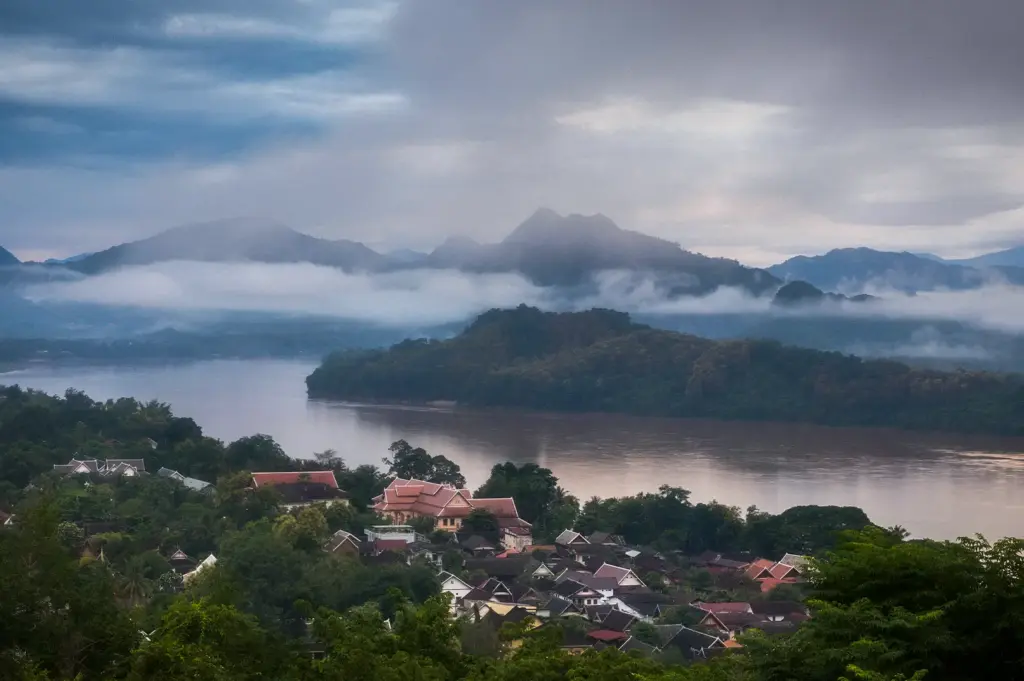
My first visit to Luang Prabang Laos lasted just three nights. I saw a temple, climbed Mount Phousi with the crowds, bought a scarf, and left thinking I’d experienced the town. I hadn’t.
Luang Prabang Laos is a UNESCO World Heritage Site known for its temple-filled old town, riverside setting, night markets, Lao food, and easy access to places like Kuang Si. Most travelers pass through between Bangkok and Hanoi—a stopover, a box ticked—but Luang Prabang doesn’t reward the rushed. It reveals its spiritual life, local rhythm, and natural beauty slowly, which is exactly why it deserves more than a quick pass.
Here’s what those slow days taught me.
Getting to Laos Luang Prabang
There’s no direct flight from Singapore. I usually route through Bangkok, then take the short hop north to Luang Prabang International Airport. Singapore via Hanoi works too. And if you’re already drifting through northern Thailand, Chiang Mai connects cleanly.
Once you land, forget any idea of trains or a metro. There’s no MRT here, no subway, and you won’t miss them. The old town is small, most of it within a ten to twenty minute walk of the city center. I rent a bicycle for wider loops, take a tuk-tuk when the heat wins, and otherwise just walk. The place was built for feet, not engines.
When to Visit Luang Prabang
The cool, dry months from November to February are the easy answer. Days sit between roughly 15 and 30°C, the light stays gentle, and long walks along the streets of Luang Prabang won’t leave you soaked. March to May turns hot and heavy. If you come during the dry season, move early and rest through the afternoon, the way the locals do. On the other hand, the rainy season (June to October) transforms the natural beauty: rice fields deepen in green, Kuang Si waterfalls roar fuller, and crowds thin.
One September morning I had a temple courtyard entirely to myself. The rainy season is a quieter, vivid time to visit, though paths get muddy and showers sudden. I’ve since come to think the rainy season might be the most beautiful time of all.
Luang Prabang’s Amazing Temples and Temple Hopping
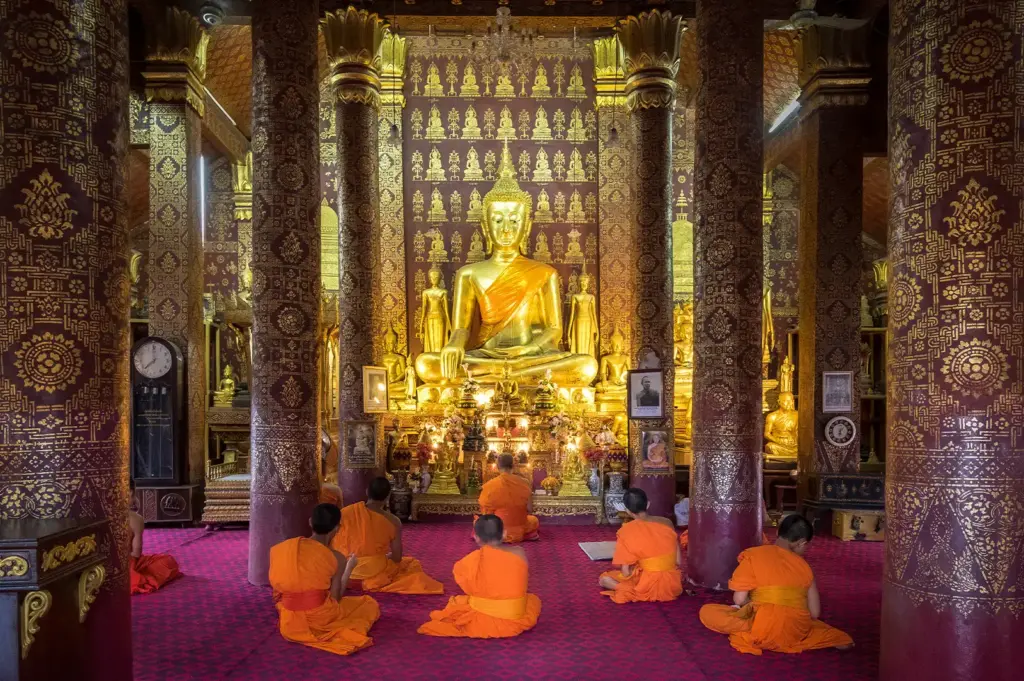
Luang Prabang, one of UNESCO’s World Heritage Site, is famed for its beautiful temples, each best visited in the early hours before tourists arrive.
Wat Xieng Thong, built in 1560 during the Lan Xang kingdom, is the city’s holiest temple. Its sweeping roofs and golden mosaics, especially the stunning “Tree of Life” glasswork, are mesmerizing. The entrance fee is about 20,000 LAK. Arrive before 9am to see orange-robed monks moving silently through courtyards.
Wat Mai, near the night market on Sisavangvong Road, features a five-tiered roof and golden bas-reliefs. It pairs well with a visit to the Royal Palace Museum, former home of the royal family, displaying Buddha statues and regalia. Entry is around 20,000 LAK.
Wat Phonxay Xayxana Songkham and Wat Visoun offer quieter, authentic temple experiences off the beaten track. Wat Visoun, built in 1513, houses the unique “Watermelon Stupa” and costs about 20,000 LAK to enter.
The daily alms giving ceremony (Tak Bat) happens before dawn along the main street. Orange-robed monks walk silently, receiving sticky rice offerings wrapped in banana leaf from locals and respectful visitors. This sacred ritual is a profound glimpse into Lao culture and daily life—please observe quietly and dress modestly.
Temple hopping here is a year-round activity that reveals Luang Prabang’s spiritual heart.
Nature’s Masterpiece: Visit Kuang Si Falls and Tad Sae Falls
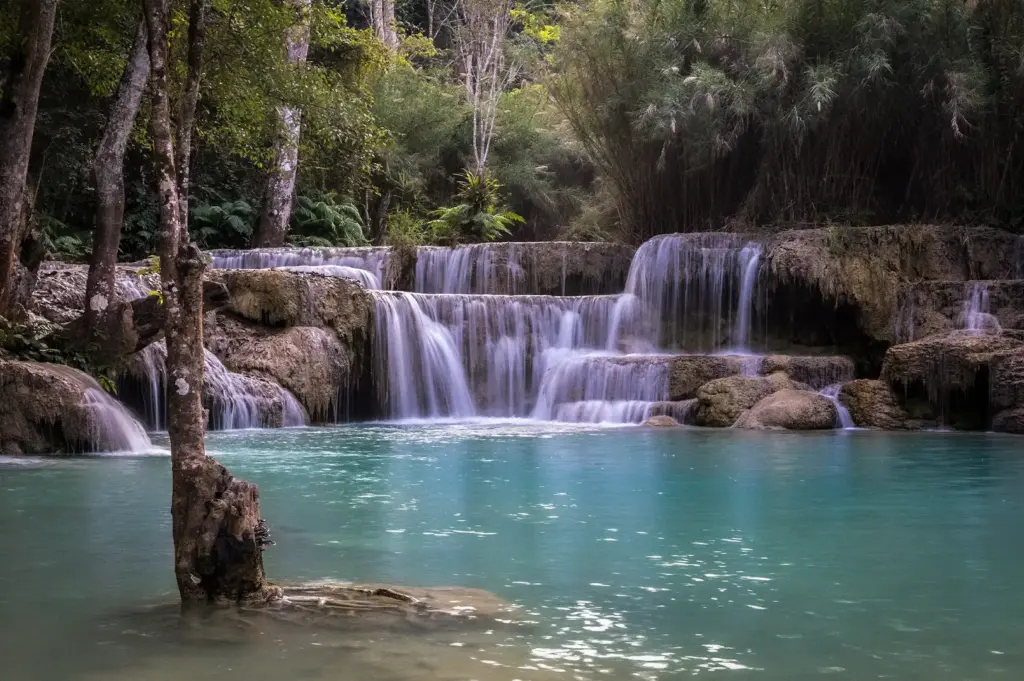
No trip to Luang Prabang is complete without a visit to Kuang Si Waterfalls, about 30 km from town centre. The entrance fee is roughly 25,000 LAK. Arrive early, before 10am, to enjoy the turquoise limestone pools and cascading falls without crowds. Swim in the cool waters, explore trails, and visit the nearby Kuang Si Butterfly Park. The Kuang Si Bear Rescue Centre at the entrance is home to playful moon bears rescued from captivity, adding an ethical and heartwarming stop.
For the best experience, book a private tour or hire a tuk tuk to explore at your own pace, including stops at the whisky village to sample local rice liquor.
Tad Sae Falls, around 15km out, is the quieter cousin. More forest, fewer people, a relaxed place to swim reached partly by boat ride across the river. But it’s seasonal—water levels swing hard, and in the dry season there’s little to see. Go after the rains, and check conditions before you commit. Twice I’ve heard of travelers arriving to find it barely running.
Exploring the Mekong River and Nam Khan River
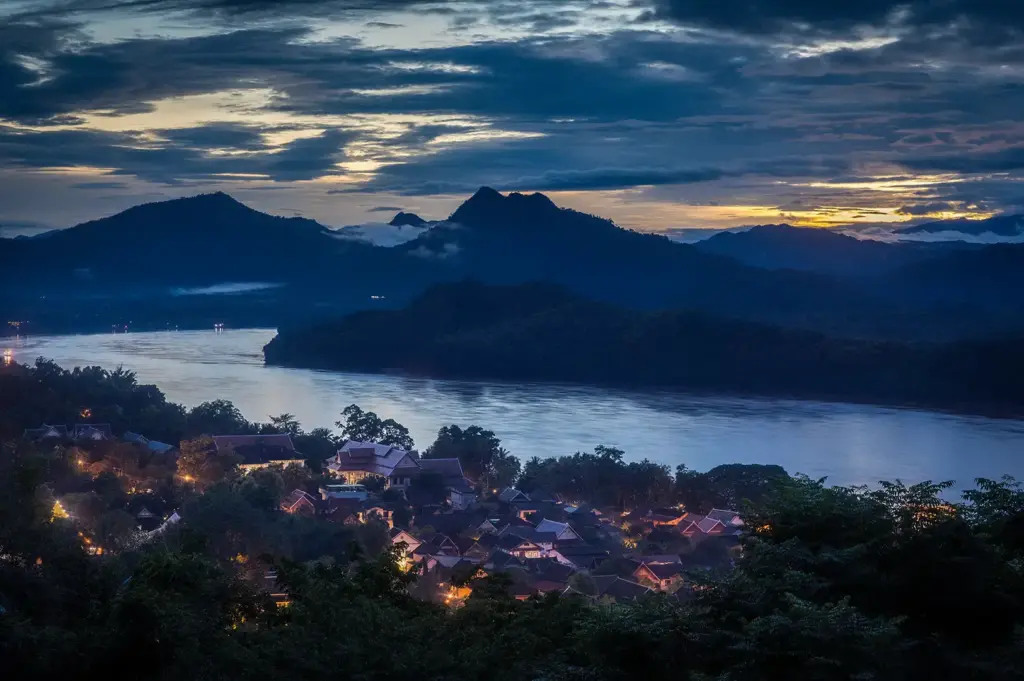
The Mekong River is Luang Prabang’s lifeline. Everyone comes for the sunset, around 5 to 6pm, settling into the riverside bars and cafés as the water shifts from brown to gold to grey. It is worth it but here’s what most people miss: the mornings are quieter and just as lovely. Either way, find a spot, order something cold, and stay. I’ve watched that river for an hour without once reaching for my phone.
If you want to see the Pak Ou Caves—ancient limestone grottoes filled with thousands of Buddha statues, set into the cliffs further up the Mekong—the standard way is a slow boat day trip upstream. It’s a long day, but the river itself is the experience as much as the destination.
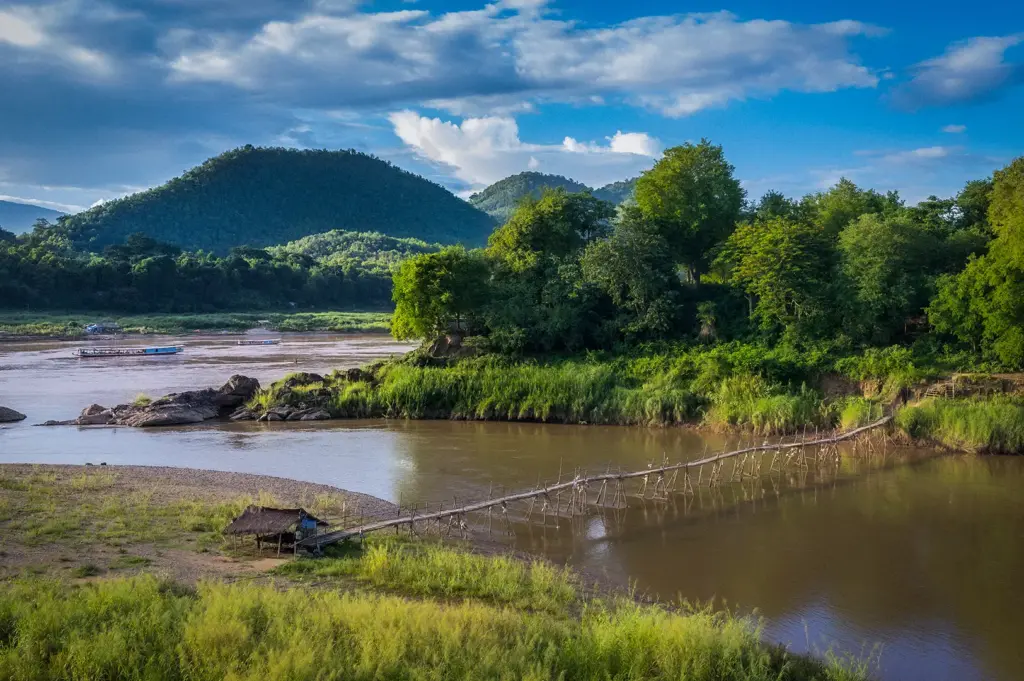
The Nam Khan River provides a gentler alternative. The bamboo bridge that crosses the nam khan is rebuilt each year after the rains wash it away, so its existence depends on the season. Cross it early, when the light is low and you’re the only one on the planks, temples and villages reflected in the water below.
Stay in Luang Prabang
Night Market, Morning Market, and Lao Cuisine
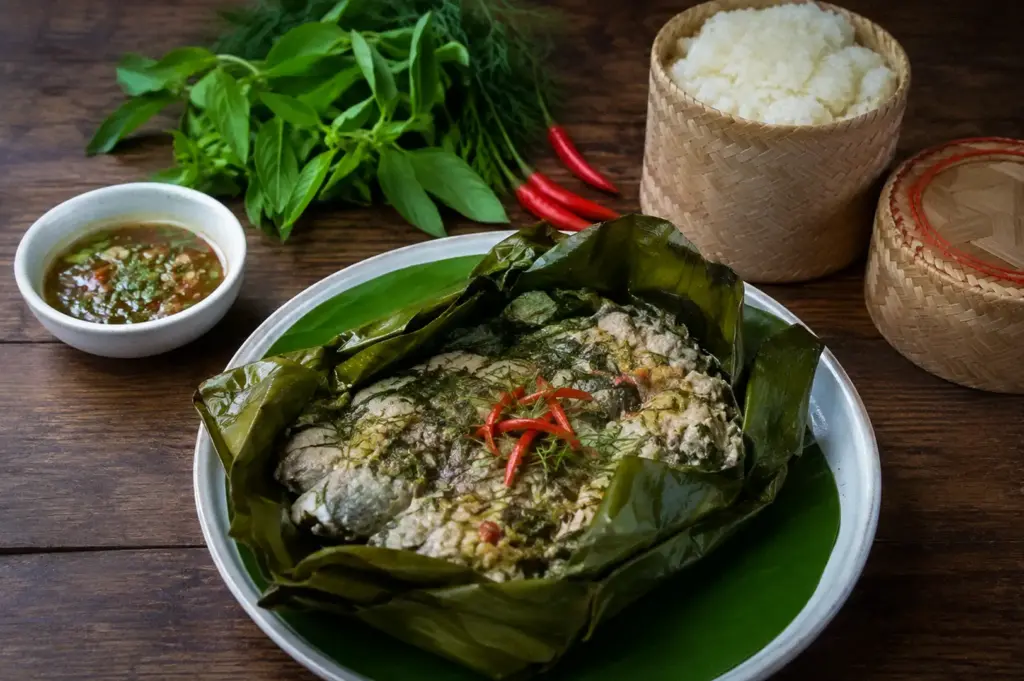
Lao cuisine is subtle and rewarding for unhurried eaters. Sticky rice accompanies nearly every meal, with the best flavors found at local vendors away from the main street. For a relaxing meal after temple hopping, my favourite restaurant offers traditional Lao food in a cool, welcoming setting.
The lively night market runs along Sisavangvong Road from 5pm to 10pm, showcasing handmade textiles, paper lanterns, and street food. Though it closes earlier than many Southeast Asia markets, it’s a great spot to sample Lao cuisine and soak up local culture.
In contrast, the morning market, open from 5am, features fresh produce, sticky rice, and local snacks. This market is where authentic Lao food shines—try mok pa (steamed fish in banana leaf) and other traditional dishes. Many cooking classes start here, offering an immersive cultural experience.
Together, the night and morning markets and local cuisine provide a full taste of Luang Prabang’s rich food culture and vibrant street life.
Accommodation Options and Climb Mount Phousi for Panoramic Views
Luang Prabang offers a range of accommodation options, from budget hostels with shared dorms to luxury hotels along the Mekong River. Many mid-range choices provide private rooms with air conditioning and river views at the best price. Choosing accommodation near the town centre or riverside enhances your experience, letting you easily explore on foot or by tuk tuk.
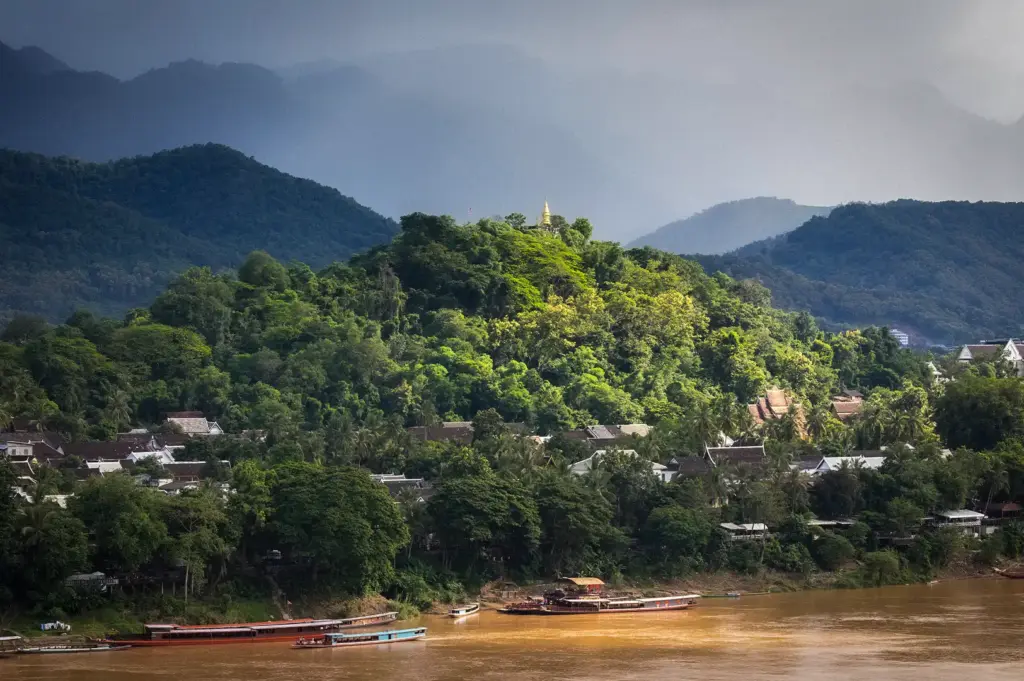
For a memorable experience, climb Mount Phousi, the highest hill in Luang Prabang, which offers 360° views of the town, Mekong and Nam Khan rivers, and surrounding mountains. The entrance fee is about 20,000 LAK, and the climb takes roughly 50 minutes. Visit at sunrise for solitude and misty vistas, or arrive early before sunset crowds gather. The golden light on the beautiful buildings and rivers is unforgettable.
If you’re the sort who plans a longer, gentler trip and wants to choose an accommodation that truly sets the right rhythm, I’ve found that choosing the right base shapes everything that follows. Explore this guide to the best hotels in Seoul South Korea here, where it captures that idea well and the same thinking applies to how you stay in luang prabang.
Practical Tips: Transport, Costs, and Travel Insurance
Tuk tuks are the main transport outside the city centre, with fares varying by distance and group size. Bicycle rentals are affordable and ideal for exploring at your own pace.
Temple entrances typically cost 20,000 LAK. Local meals range from 30,000 to 80,000 LAK. Carry Lao kip cash, as markets and small vendors prefer it.
Travel insurance is essential for any trip to Southeast Asia, covering unexpected events during your epic adventure.
Slow Days in Luang Prabang: The Authentic Experience
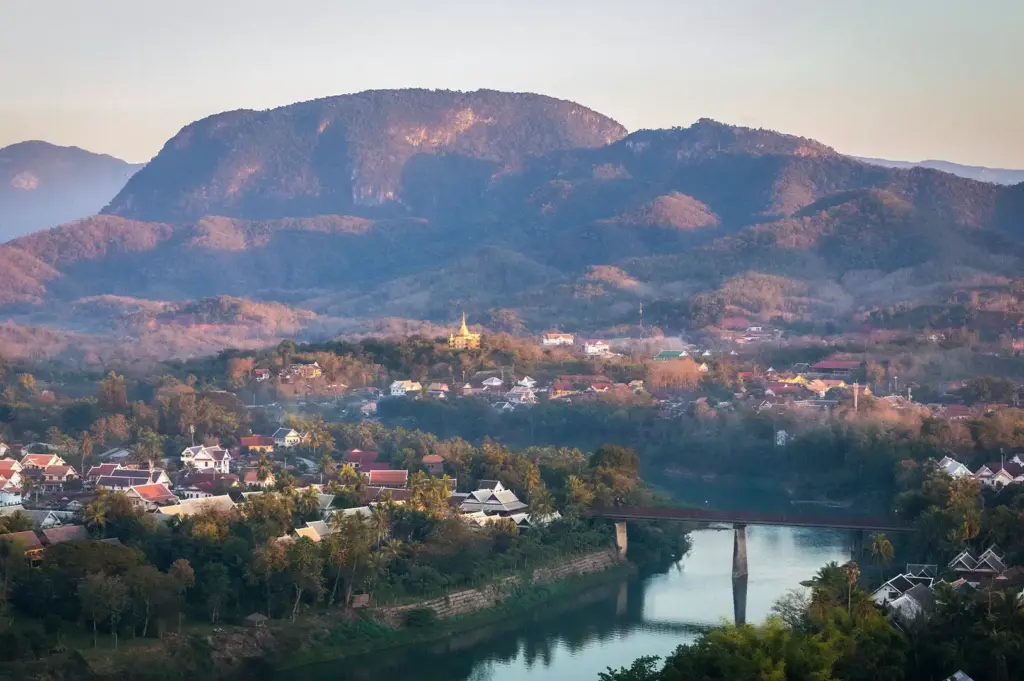
Luang Prabang isn’t a place to rush. The magic lies in slow mornings at the same café, quiet river walks, temple courtyards before the town wakes, conversations with local artisans, and sunsets by the Mekong without checking the time.
It’s a place you slowly come to know—the same place, seen again and again, showing you something new each time. This town invites you to explore deeply, stay longer, and savor the authentic Lao culture, beautiful temples, natural beauty, and gentle rhythms of northern Laos.
For a deeper look at slow travel in Southeast Asia, explore six days in the town of Luang Prabang and discover it’s quieter side in a slow-paced journey that leaves room for familiar streets, riverside cafés, and everyday local moments.
Give Luang Prabang more than a stopover. It will give you back far more than you expect.





